
Notebooks? Check.
Pencils, freshly sharpened? Check.
Backpack, lunch bag and a focused mindset to rock the upcoming school year? Check, check and check!
These are the requirements one would typically expect for a new 2nd grader to have on the first day of school. However, for the 2026-2027 school year, many of our social media timelines revealed a new reality.
Some of our elementary school girls are wearing lace front wigs, faux nails and (long) lashes. They’re also fitted in head-to-toe high-end designer gear like Lululemon—not the denim overalls and plaid skirts of years past. The visuals filling our timelines over the last few weeks were startling—for some—to say the least.
While many of us are left scratching our heads and wondering what happened to the barrettes, bo-bos, and Osh-Kosh ‘fits of the past, clearly some in our community willingly embrace these adult-ready looks.
Let’s remember that these are not 16-, 17- or 18-year-old teenagers heading to prom or a homecoming dance. These are little ones as young as 6-years-old wearing full frontal lace wigs with hair flowing way past their shoulders heading to construction paper decorated classrooms.
What gives?
Are our babies being forced to bypass the fun, innocent stage where they’re excited to wear basic tees with their favorite cartoon characters and inexpensive light-up sneakers? As tweens (ages 9-12), isn’t it an unofficial rite of passage to go through an awkward phase filled with enlightenment and discovery as you anxiously await your teenage years? Now, there are tween girls who can achieve a contour that would make some professional makeup artists jealous.
What about the real reason we’re having these conversations in the first place: school. Not too long ago, there was an uproar from some in our community about the costs and extensiveness of the necessary school supplies many districts require for the academic year. Are our priorities collectively on the right things? Do we put nearly as much time and effort into attending PTA meetings, parent-teacher conferences and ensuring our children are engaged in enriching extra-curricular activities?
The discourse over this across social media has been intense over the last few weeks since back-to-school season began. Our algorithms feed us what we instruct it to. For many, that leads to being bombarded with elaborate first day of school photo shoots (sometimes with a step-and-repeat and intricate balloon display), and designer ensembles, a fresh set of nails and hairdos to match. Some find it completely cringe and others argue that it is harmless fun. Still others maintain that our society has been swaying in this direction for longer than we might want to admit. We obsess over what pictures and videos we post to ensure they fit the right aesthetic, we overanalyze what filters we will use to post said content, and we make it a priority to “know our angles”. Most of us are attached to our phones both personally and professionally the majority of our waking hours. The younger generation is observing all this behavior whether we consciously teach it or not.
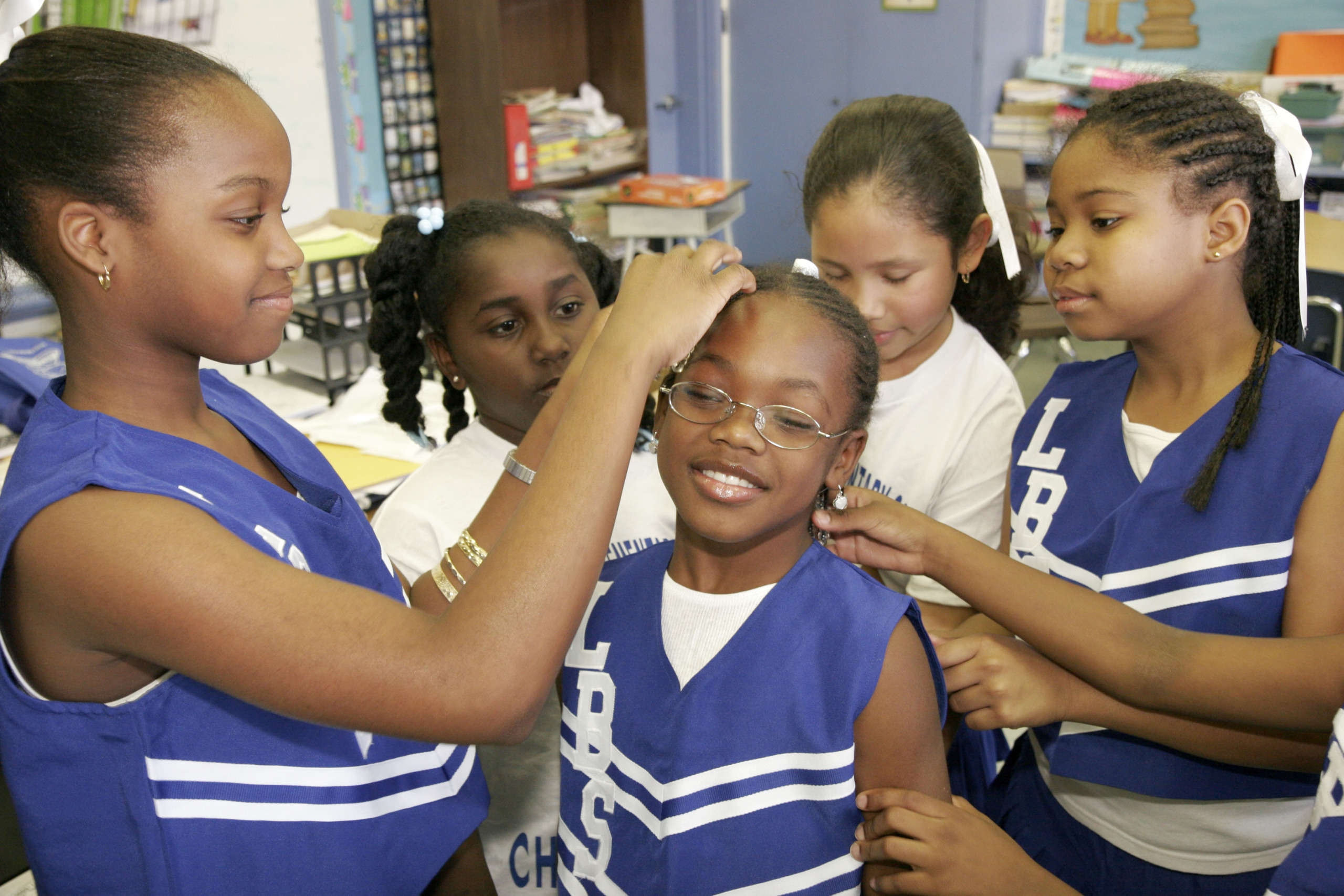
One question we’re asking is: Is this type of dressing and hairstyling a desire of the child, the parents (in most cases the mother) or a combination? We checked in with LaToya Stone, a mom, award-winning certified life coach and the CEO (Chief Empowerment Officer) of REAL Wellness, Inc., a holistic health and well-being company that works extensively with teachers, administrative and executive staff throughout elementary and middle schools in the New York City area.
“You can allow your kid to be the kid,” asserts Stone. “Many parents are trying to be friends with their children. There’s so much to unpack. If I’m going to go back to the root of it, [much of this] is because of insecurities we had as a kid. ‘When I was a kid, I didn’t feel like my hair was long enough. It was too thick.’ Now all of it (wigs, weaves, etc.) is available and at our fingertips,” she continues. Stone explains that much of these style choices are not even necessarily about the child but the parent who picks them out. “I’m not even going to let my daughter go through that process like I did. I’m just going to put this [wig] on and show her this is what’s cute. This is your first day of school, so you’re going to look your best. This is the best. Your natural hair is not.”
Stone points out, “In elementary school, your job is being curious and enjoying your friends. You don’t care what brand sneakers you’re wearing. You begin to learn because you notice that certain sneakers, clothes, and hairstyles get more validation than others. Children notice what gets a lot of praise and attention and what doesn’t.”
“It’s about instilling, promoting and getting young and even older people to be in a space where they can accept who they are from the inside out. That’s where the work comes in too, because you can’t accept who you are outside if you haven’t accepted who you are inside,” advises Stone.
“This is our invitation to look internally and begin to say, ‘What do I really value and believe? Am I acting according to what I say I value and believe? Am I in alignment? ‘ If I’m not, why? And if I am, let me continue to do things that support that.’ The hardest thing for us to do as humans is to be honest with ourselves. If we aren’t, it’s just going to be continuation on with the next generation because they’re watching us. They are nothing but a reflection of us.”
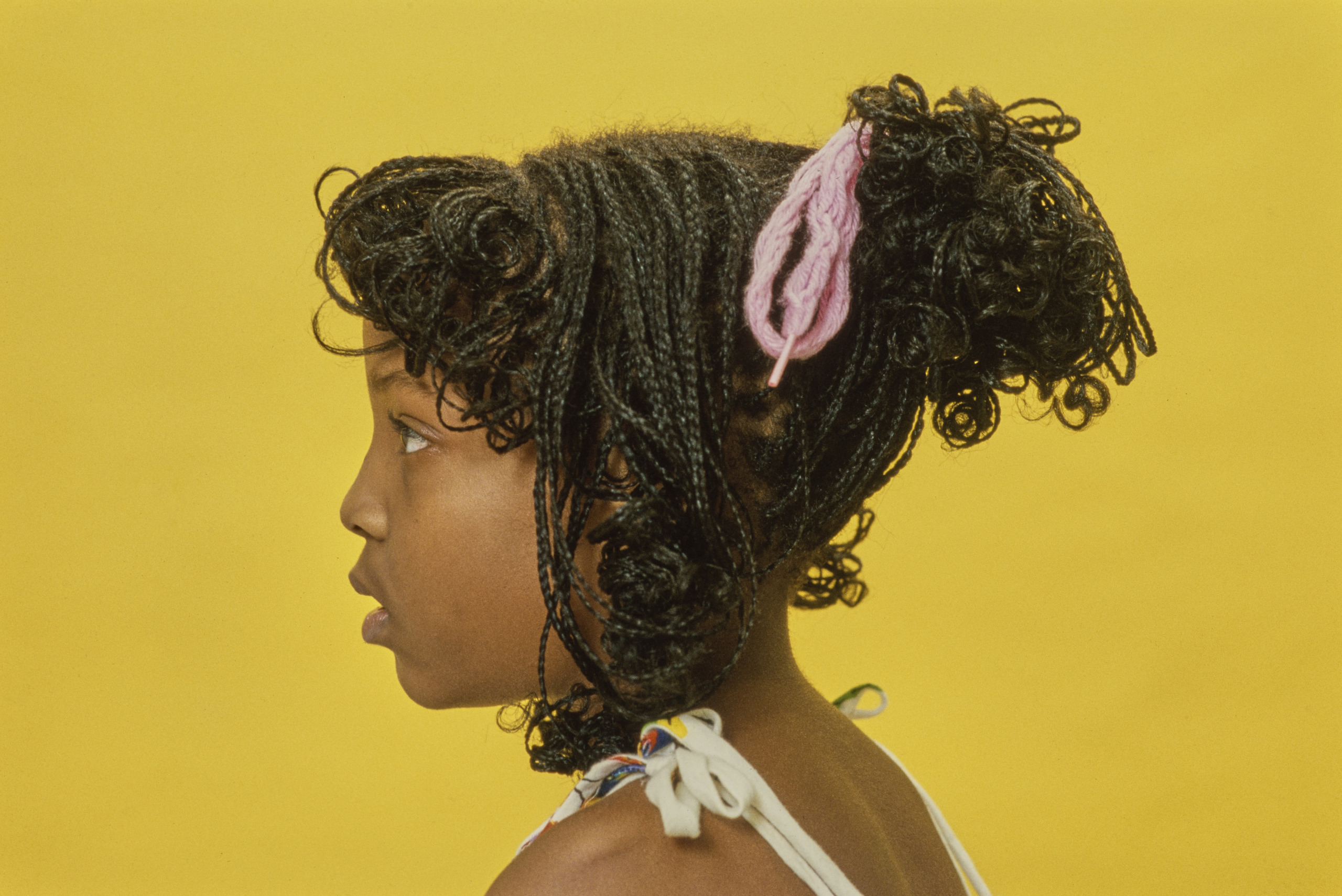
Stone is clear that these types of situations are not an excuse to tear down a child who clearly does not buy their own clothes or have the means to get an install on their own. “They have only been alive for 6, 7 or 8 years.”
Our own GU editor Danielle Wright wholeheartedly shares this latter sentiment and is adamant about the scrutiny of these “grown-ish” fashion and beauty options being directed at the parents and caregivers and not the little girls wearing them. “The blame should be on the parents, yet the child’s faces are being plastered [on the Internet]. I don’t think it is fair, and it might diminish the child’s self-esteem.”
Wright offers yet another intriguing point to ponder: “I do think there’s a conversation that needs to be held about what classifies as ‘grown’ in Black households because the goal post is constantly moving as the years go by.”
This is a valid point as is the question of who gets to decide what is too grown? Should geographic location matter? Parents are having these debates in their group chats, on TikTok and Instagram and at brunch. When is too soon for faux lashes, wigs and long nail extensions? If a parent is aiming to be progressive, should they allow their children to wear certain items before their generation did? (We can probably all agree that being too strict as a parent is often counterproductive.) Furthermore, do we collectively put nearly as much thought into other important parenting decisions like what PSAT prep classes to enroll our little people in? Does it matter?
No one knows all the answers. Most of us are doing our best as parenting is the hardest job in the world. What we do know is that we want to keep the best interest of the children at the forefront of these conversations. We’re wishing all our youth, from toddlers to college students, a safe, enjoyable and prosperous school year!

Author: Bridgette Bartlett Royall
Read the original article on Essence.
Leave a Reply