
After selling her brand to P&G in 2023, Rodriguez is planning her next moves.
Category: Uncategorized
-
Trump combined disaster aid announcements with plugs for GOP candidates
Trump approved over $846M in disaster relief for Republican-leaning states, combining the announcements with praise for candidates he endorsed in upcoming elections.
-
Mother says new custodial sentences for daughter’s rapists ‘better’ but still ‘not enough’
Two teenage boys convicted of rape had initially been given non-custodial sentences but have since been handed a four year detention.
-
Coast Guard surges resources to DC and elsewhere to protect July 4 celebrations
U.S. Coast Guard surging resources to protect July 4 celebrations
-
Munich Film Festival Chiefs Talk Global Ambitions, Championing German Talent & U.S. Indie Cinema
The Munich International Film Festival is well underway. The festival positions itself as the major platform for German film and filmmakers, but has also leaned heavily into co-production and expanded its international output. This year, its major CineMerit honors went to Toni Servillo and David Duchovny, while Pedro Almodóvar and U.S. filmmakers including Ira Sachs […]
-
The nation’s cartoonists on the week in politics
Every week political cartoonists throughout the country and across the political spectrum apply their ink-stained skills to capture the foibles, memes, hypocrisies and other head-slapping events in the world of politics. The fruits of these labors are hundreds of cartoons that entertain and enrage readers of all political stripes. Here’s an offering of the best of this week’s crop, picked fresh off the Toonosphere. Edited by Matt Wuerker.
-
The election that never ends: Inside Trump World’s endless relitigating of 2020
On June 8, Jay Clayton, the U.S. attorney for the Southern District of New York, was asked on CNBC whether there was anything to the conspiracy theories swirling around California’s slow-counted primary results. He stopped a hair short of alleging fraud, then spent the next two minutes implying it anyway.
“On the integrity side, we’re doing an absolutely terrible job,” he said. “And the American people are right to question it.”
When CNBC host Becky Quick pointed out that California can take weeks to count its ballots because of its laws on mail-in ballots and same-day registration, Clayton didn’t back down.
“No, there’s a great phrase: opportunity for fraud,” he said. “It makes you ask: Is mail-in voting being used by one group and not another — whether it’s being used honestly or honestly and dishonestly is a question that now everyone is asking.”
Within days, Trump nominated Clayton to run the nation’s intelligence apparatus.
A willingness to entertain or outright embrace 2020-style election fraud conspiracy theories has become a litmus test for entry into the Trump administration’s upper ranks — and once there, is just as often the surest way to survive. When an official’s standing starts to slip — a bad news cycle, a sidelining, a looming firing, a confirmation fight — one of the few levers left is to be seen vindicating the president’s conviction that American elections are being stolen whenever he or his party lose.
The maneuver has become common enough to have a recognizable arc. For some, it has meant durability through scandals that would have ended a career in another era. For others, it has been a last bid for relevance before the exit. The card often gets played; it does not always win.
The fixation begins with the president himself. What one senior administration official called Trump’s “obsession” with relitigating the 2020 election has become an organizing principle of his second term. Within hours of his inauguration, he pardoned 1,500 Jan. 6 defendants — the first of many moves to recast a violent attempt to overturn a certified election as noble martyrdom deserving reward. He has expected his Cabinet to keep chasing debunked conspiracy theories about the 2020 election; rolled out a White House task force to declassify records related to the 2020 presidential election; and has empowered election denier Kurt Olsen with a broad remit to pursue election fraud from within the administration, and with the imprimatur of state legitimacy.
The White House defended the administration’s election-related efforts as fulfilling a core campaign promise.
“President Trump — and his entire administration — is committed to ensuring that Americans have full confidence in the administration of elections, and that includes totally accurate and up-to-date voter rolls free of errors and unlawfully registered non-citizen voters,” White House spokeswoman Abigail Jackson said in a statement to MS NOW.
Hardly a rally, interview or public appearance goes by without Trump repeating the false claim that the 2020 election was stolen from him. It also drives Trump’s legislative agenda. Over the last several weeks, the president has essentially frozen the legislative calendar on Capitol Hill — pausing Clayton’s nomination process, canceling plans to sign a major bipartisan housing bill, freezing out a reauthorization of a critical intelligence-gathering power — to pressure GOP lawmakers to pass the Safeguard American Voter Eligibility, or SAVE, Act, a strict voter-identification bill he has justified with groundless claims of mass voter fraud by noncitizens.
“This is still a central tenet of MAGA and an inspiration for people to get to the polls is the 2020 election,” said a person close to the Trump administration, who was granted anonymity to speak about a sensitive topic. “You want permanent job security? It’s getting focused on where his priorities are. And this is a super priority.”
Kash Patel’s tenure leading the FBI has offered one of the clearer examples of how it works. Few Trump administration officials have generated as many damaging headlines and few have proven as durable. Two days after The Atlantic published deeply sourced allegations of Patel’s drinking and erratic behavior — the kind of story that, in an earlier era, might have ended his career within a day — Patel, who has denied those allegations, told Fox News’s Maria Bartiromo that the DOJ would soon make arrests related to the 2020 election.
One senior White House official, asked last month about Patel’s job security, pointed to his work on the indictment of the Southern Poverty Law Center, the nonprofit legal advocacy group, on fraud and money laundering charges, and to his 2020 election-related arrests as a buffer against an imminent firing. Patel, acting on an ongoing priority of the president’s, leapt into public action to announce the indictment at the end of April.
The SPLC case has drawn skepticism from career prosecutors over its legal foundations; whistleblowers later told MS NOW the indictment had been rushed.
But for Trump and Patel’s purposes, the redirection worked: Trump has long been suspicious of the law center, and the indictment prompted him to post on Truth Social that if the allegations were true, “the 2020 Presidential Election should be permanently wiped from the books.”
“He’s still acting on the president’s priorities,” the person close to the administration explained.
In a statement to MS NOW, an FBI spokesperson said that “election integrity is one of the top priorities of this FBI and we continue to work around the clock to pursue criminal actors who seek to undermine our system and the rule of law.”
Other top officials have followed the same playbook, even as the administration has yet to surface any evidence of an election conspiracy against Trump. Asked whether the pursuit of election fraud was a prerequisite for a Cabinet post, the senior White House official said that any appointee had to “be a person who is open to the possibility that we have election security issues.”
“Election integrity has a wide range of issues: foreign interference … we know some people have voted multiple times — so it has to be someone who has an open mind and understands the issue and is willing to investigate,” said the official, whose identity is known to MS NOW and who was granted anonymity to address internal issues. “Whether they come up with anything? It’s important for someone who will take the time, understands the issue and will get to the bottom of whether anything will happen.”
That open-mindedness was demonstrated by acting Attorney General Todd Blanche in the wake of Trump’s firing of former Attorney General Pam Bondi. In the weeks before Trump nominated Blanche as Bondi’s permanent replacement — “a trial period,” as a senior White House official told MS NOW at the time — he had to show he belonged in the job permanently.
Under Blanche’s watch, Justice Department leaders have ramped up their rhetoric around various election-fraud hunt efforts and moved to showcase the work they had done on it.
“We are not simply monitoring; we are investigating,” Blanche said in a private speech delivered to Judicial Watch, the conservative advocacy group, at the end of April. “Illegal voting indictments have increased by 1600% in the first year of this administration compared to the prior year. That is not an accident. That is a change in posture.”
In a May interview with Bartiromo, Blanche said that there was “tons of evidence that the election was rigged” and that there was “evidence about that for many, many years.” Pressed for specifics, he pointed to ongoing investigations in Arizona and Fulton County, Georgia, saying that the DOJ was working to determine “whether the right people voted, whether people who were supposed to vote voted, whether there was one vote cast per voter.”
There was no concrete evidence to point to.
“You’ll say to me: How long has it taken? Why is it taking so long? And the reality, the answer, is that because it takes a lot of work to uncover what happened in 2020,” Blanche said.
It’s a variation of an answer that has been given for half a decade now. One GOP lawyer told MS NOW that the answer means one thing.
“They’ll never say there’s nothing there … and restore credibility to the bedrock institution of the country,” the lawyer said.
“Despite having all the levers of government, there has yet to be anything that approaches substantive evidence of systemic election fraud or inaccurate elections,” the lawyer said. “They’ve got the keys to the kingdom. They can issue subpoenas, they can subpoena all sorts of stuff … if the case was there, they should have been able to make it. And they haven’t. There’s still nothing. All those lawsuits after 2020, for all the pounding the table rhetoric, zero evidence of systemic problems.”
None of that has stopped officials from acting like evidence is just around the corner. As Director of National Intelligence Tulsi Gabbard drifted to the margins of the administration’s biggest national security operations, she took on an assignment that stretched the bounds of her job description: attending the FBI’s seizure of 2020 ballots in Fulton County and opening an inquiry into vulnerabilities in electronic voting machines.
Gabbard told lawmakers she went to Georgia at Trump’s request, but the White House and Trump claimed to have no involvement in the assignment.
“He obviously very much cares about it, and cares about 2020 and asked about it frequently,” said another senior administration official with knowledge of Gabbard’s conversations with Trump, who was granted anonymity to speak candidly about a sensitive issue. “But, as you know, people go in and out of favor fairly quickly. … You could be fine on Tuesday and then fired on Wednesday.”
Gabbard left the position earlier in June, citing her husband’s battle with cancer. Trump named Bill Pulte as her interim replacement and teased that “you may find out some things about the rigged elections” with Pulte in the job.
Not every official has been able to successfully cash in on that card. Kristi Noem’s attempt to publicly highlight false election-fraud claims out of Arizona and tout the SAVE America Act in February came just before her ouster. Pressed for a concrete example of voter fraud, she didn’t provide one.
“Oh, I’m sure there’s many of them,” she responded.
The post The election that never ends: Inside Trump World’s endless relitigating of 2020 appeared first on MS NOW.
-
Trump settles for July 4 eve flyovers and fireworks at Mount Rushmore
President Donald Trump has joked about having his face carved into Mount Rushmore. On Friday night, he will settle for standing in front of it during a White House-branded 250th U.S. anniversary event.
Trump will kick off the weekend’s Fourth of July festivities by headlining a “spectacular fireworks finale” and military tribute Friday night at the national memorial in South Dakota. He’s expected to stand against the backdrop of the statue’s 60-foot-tall faces of George Washington, Thomas Jefferson, Abraham Lincoln and Theodore Roosevelt as he seeks to cement his own legacy in American history.
The president and his allies have pushed the idea of making Trump the fifth U.S. president in the lineup carved into the granite facade of Mount Rushmore, no matter that the National Park Service has said there’s no viable space to add another president to what it considers to be a completed work of art.
But that hasn’t stopped Interior Secretary Doug Burgum, a Trump loyalist who oversees U.S. national parks, from advocating it.
“Well they certainly have room for it,” Burgum said last year in a FOX News interview with Trump’s daughter-in-law Lara Trump.
Again on Monday of this week, Burgum put Trump in the ranks with Washington and Roosevelt — though his historical detailing was wrong — telling Fox News: “We had Washington at the first, we had TR at the 125th, and we’ve got President Trump at the 250. All three of them, remarkable change makers moving our country forward.”
MS NOW reached out to the NPS this week seeking clarification on whether it would be possible to add another face to Mount Rushmore, but it has not received a response.
Two months ago, the president posted a picture on his social media platform Truth Social of his face atop Mount Rushmore, right next to Lincoln’s. Rep. Anna Paulina Luna, R-Fla., has sponsored legislation to make it a reality, albeit a long-shot bid. And former Trump adviser Roger Stone has pushed a “One More for Rushmore” petition online.
Trump has repeatedly compared himself to Lincoln, insisting he’s been treated worse. After the White House Correspondents’ Association dinner shooting in April, which is being prosecuted as another presidential assassination attempt, Trump said he has “studied assassinations,” and they go after people that “make the biggest impact.”
In October, he said he’s been told he is the “third best president” behind Washington and Lincoln. He said that made him “extremely angry” and that while it’s going to be “very tough to beat Washington and Lincoln, we’re going to give it a try.”
As for Roosevelt, Trump paid his respects on Wednesday at the opening of the Theodore Roosevelt Presidential Library in North Dakota near the national park named for the 26th president.
“He was really a great he-man,” Trump said.
Trump said in September 2020 when he signed the Great American Outdoors Act during his first term that lawmakers told him he was the “number one environmental president since Teddy Roosevelt.”
Joining Roosevelt on Mount Rushmore poses its own uphill battle, perhaps far greater than the height of the monument itself. Luna’s bill has next to no chance of passing the Senate and becoming law because of the upper chamber’s 60-vote filibuster, a procedural rule Trump has sought in vain to abolish. Her bill has seen no movement since she introduced it in January 2025.
His return to the national park as part of his 250th U.S. anniversary swing — he made his last visit there four months before his election defeat in 2020 — is expected to be filled with pomp and pageantry, despite “severe to extreme” drought conditions heightening wildfire risks and a chance of thunderstorms. A NPS internal environmental assessment from March found “the proposed action will not result in significant impacts.” The NPS also said it would have a team “assess wildfire risk in the days leading up to the July 3rd event.”
It also coincides with a cavalcade of vanity projects on several fronts. Among them: a limited-edition passport featuring his face, the $16 million Lincoln Reflecting Pool renovation, three-story-tall banners with his image hanging from certain federal buildings, the White House East Wing demolition, his planned triumphal arc, the short-lived Kennedy Center rename and a proposed $250 bill with his portrait.
In 2018, then-South Dakota Rep. Kristi Noem told her state’s Sioux Falls Argus Leader that Trump told her it was his “dream” to have his face on Mount Rushmore. She said she laughed and then realized Trump was “totally serious.”
In 2020, as governor of South Dakota, Noem gifted Trump a four-foot replica of Mount Rushmore that included his face, according to a report by The New York Times. The Times also reported that a White House aide had reached out to the governor’s office asking what the process was to add additional presidents to Mount Rushmore. Trump denied that report in a post on X.
But his denial was revealing: “Based on all of the many things accomplished during the first 3 1/2 years, perhaps more than any other Presidency, sounds like a good idea to me!”
The post Trump settles for July 4 eve flyovers and fireworks at Mount Rushmore appeared first on MS NOW.
-
Oregon ER doctors win a ‘David and Goliath’ battle against a national company

In a test of a new state law, doctors in Eugene went up against a national physician staffing firm seeking to replace them. Their success is getting attention across the U.S. as other states consider similar laws.
(Image credit: sorbetto/Digital Vision Vectors)

-
How a fertilizer shortage caused by the Iran war could affect U.S. food prices
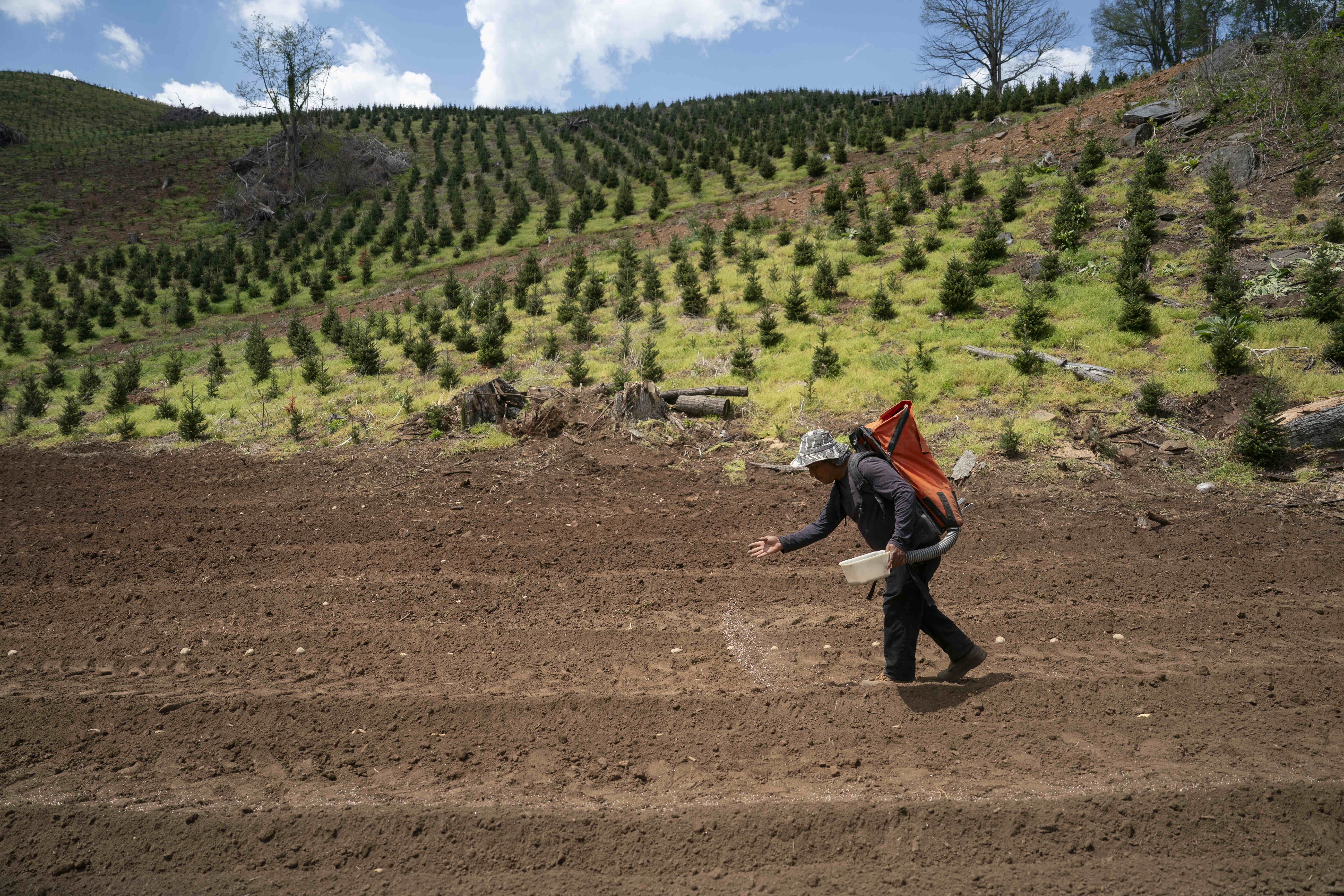
The closure of the Strait of Hormuz disrupted shipments of fertilizer and natural gas, a key component in fertilizer manufacturing. It’s unlikely to cause major price hikes for U.S. grocery shoppers.
(Image credit: Allison Joyce)

-
But first, coffee: The drink that energized the American Revolution
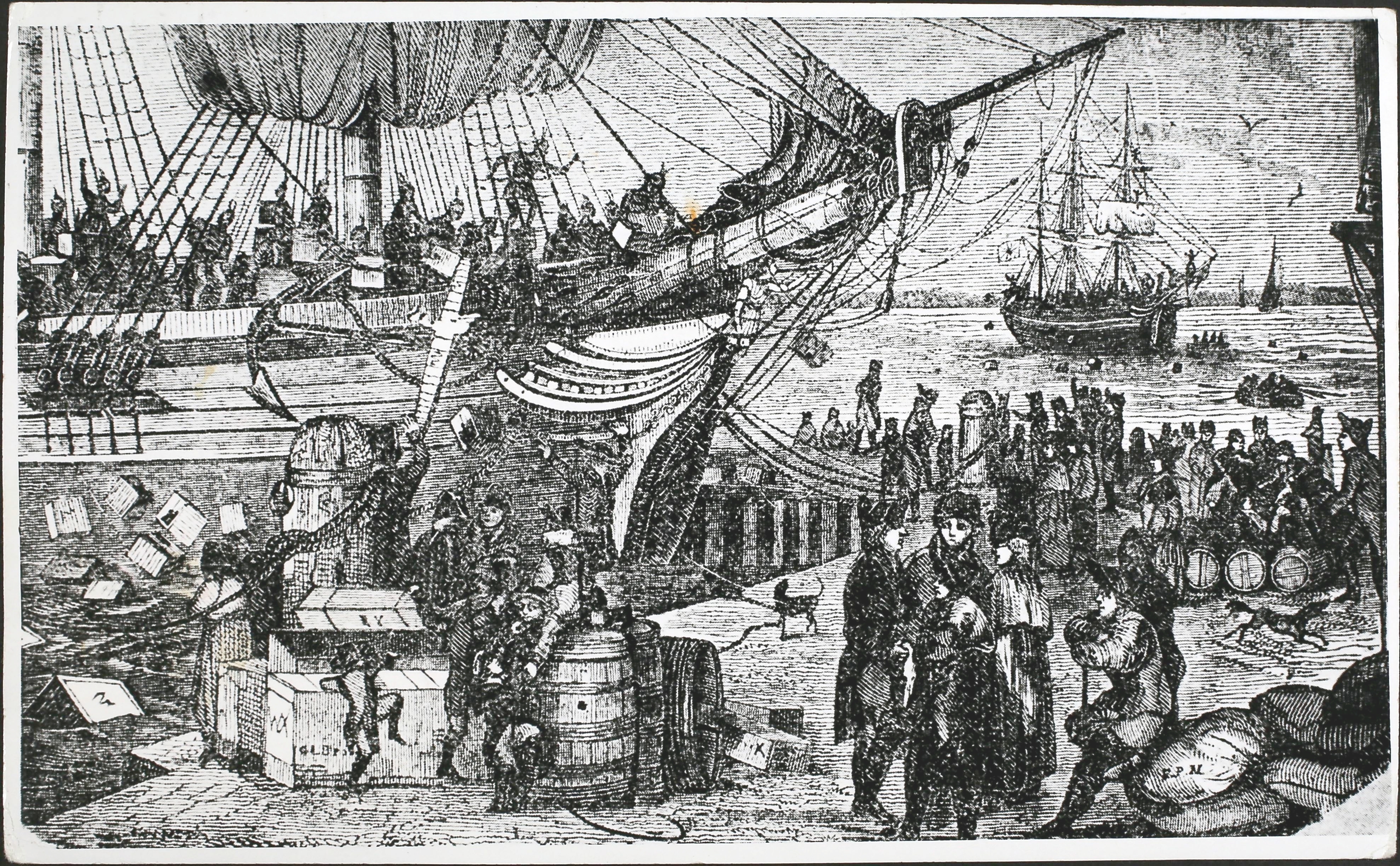
Colonial Americans were drinking coffee long before they dumped tea into Boston Harbor or fought a war for independence. The establishments that served it were already brewing revolutionary ideas.
(Image credit: Hulton Archive)

