
By Shelby Stewart ·Updated June 20, 2024
Deborah Riley Draper is a trailblazing filmmaker with a knack for unearthing compelling narratives that breathe life into cultural history. With roots in advertising and a passion for storytelling, Draper has carved a niche for herself in the documentary world, spotlighting the rich and often overlooked aspects of African American heritage. Her work, marked by its thorough research and vibrant storytelling, has earned her critical acclaim and established her as a strong voice in historical documentaries.
In her acclaimed documentary series Say It Loud, Draper dives into the electrifying life of the legendary James Brown. This film takes viewers on an exhilarating journey through the highs and lows of Brown’s storied career, from his humble beginnings to his meteoric rise as the “Godfather of Soul.” Draper blends archival footage, insightful interviews, and expert commentary to craft a narrative that not only celebrates Brown’s spirit and musical genius, but also highlights his pivotal role in the Civil Rights Movement. Through her lens, Brown emerges not just as an entertainment icon but as a vital force for social change, his music and activism intertwined in the tapestry of American history.
Draper’s portrayal of Brown is both intimate and expansive, offering a layered exploration of the man behind the music. The documentary captures Brown’s dynamic performances, his relentless drive, and his lasting influence on music and culture. By placing Brown’s story within the broader socio-political context of his time, Draper provides a nuanced and comprehensive portrait that transcends the stage persona to reveal the complexities of his legacy.
Ahead of the Emmys, Draper shared with Essence the meticulous research and creative choices that went into crafting Say It Loud, offering a behind-the-scenes look at the making of the documentary. She recounted anecdotes from her interviews with those who knew Brown best, discussed the challenges of portraying such a multifaceted figure, and explained how she balanced the musical and socio-political aspects of his life. This conversation illuminated Draper’s dedication to preserving and honoring African American history through her powerful storytelling, and her insights undoubtedly deepen our appreciation for both her work and the legacy of James Brown.
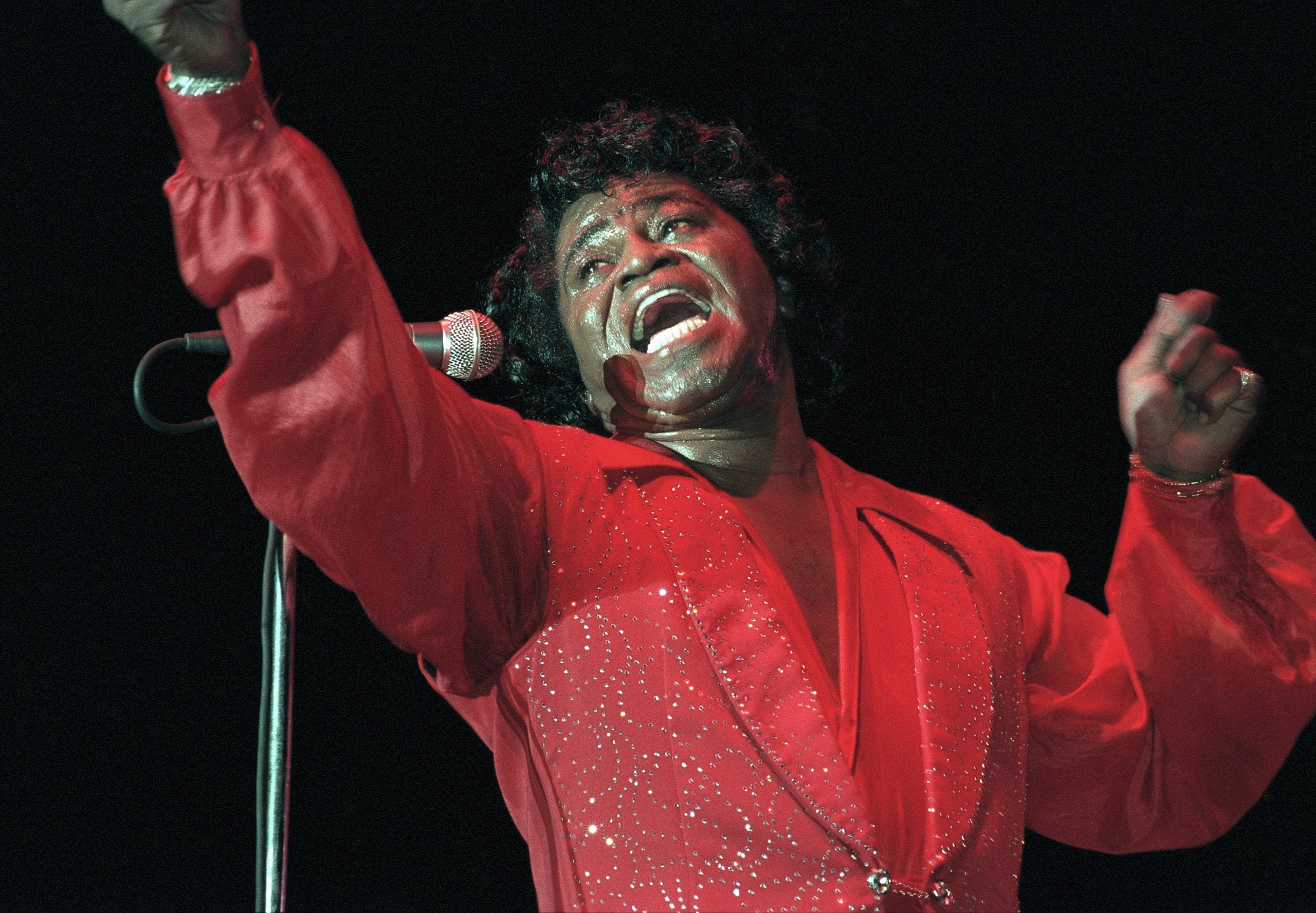 Atlanta – CIRCA 2005: James Brown “The Godfather of Soul” performs at Lakewood Amphitheater in Atlanta Georgia 2005 (Photo By Rick Diamond/Getty Images)
ESSENCE: What inspired you to delve into James Brown’s life and legacy for this documentary series?
Riley-Draper: James Brown was essential to the Black community on and off the stage at critical times during the Civil Rights Movement and in stewarding the message of the Black Power Movement and hip-hop. When I think about James Brown, I think about my father, who was born in rural South Carolina and raised in Georgia. I think about my uncles and cousins who regarded James Brown highly, not just as a singer but as a Black man who could propel himself to global stardom despite seemingly insurmountable odds. He is such an incredible example of the lived experience of Black America; he is a masterclass in work ethic and self-determination, and that alone is worth exploring.
How did the collaboration with executive producers QuestLove and Mick Jagger come about, and what unique perspectives did they bring to the project?
Questlove and Mick Jagger were already executive producers when I joined the project as director. They both have a profound knowledge of music history, notably James Brown. So, it was incumbent upon me to find new aspects of James Brown’s life to unpack in a new way that would excite them. I loved tapping into Questlove and Mick Jagger’s early introductions to the music of James Brown and how it impacted their trajectory and their becoming as artists and entrepreneurs to illustrate its generational and global impact.
What challenges did you face in capturing the essence of James Brown’s story within the confines of a four-part series?
James Brown certainly has enough life todecoding=”async” src=”https://www.essence.com/wp-content/uploads/2024/06/GettyImages-96778129-scaled.jpg” alt=”Director Deborah Riley Draper Explores James Brown’s Legacy In Docu-Series” width=”400″ height=”304″ />NEW YORK – MAY 03: James Brown visits Harlem in New York to meet fans on May 03 1979 (Photo by Richard E. Aaron/Redferns)
As a filmmaker, what do you hope viewers will take away from “Say It Loud” in terms of understanding James Brown’s impact on music, activism, and popular culture?
In November 1969, Look Magazine’s cover posed the question–Is James Brown the most important Black Man in America? I want viewers to understand that James Brown was one of the most important Black men in the 20th century. His music liberated our community and transformed us from Negro to Black–That transformation was significant after the assassination of Dr. Martin Luther King when our community needed to understand what the future could be. “Say it Loud” as an anthem is timeless and was a staple in the late 1960s and now. The song’s lyrics and meaning were chanted repeatedly during the Summer of 2020. Without James Brown, would Janelle Monae, Usher, or Bruno Mars exist as we know them? Would hip-hop exist without James Brown, especially considering how foundational “Funky Drummer” is? James Brown has been sampled over 15,000 times – that speaks for itself.
How did you approach balancing the celebration of James Brown’s achievements with a nuanced exploration of his personal struggles and controversies?
James Brown’s life began with trauma – he was born dead. He fought internal and external challenges to make a life for himself. Like most lives, his life is a roadmap of right turns and some wrong turns. Using his good and bad choices as a life curriculum is the point. His lived experience teaches us about ambition, trauma, celebrity, anger, Blackness, anti-blackness, and work ethic. We have to see and understand what went wrong the same way we see what went right – that is how to unpack a life.
What significance do you see in telling James Brown’s story now, particularly in today’s socio-political climate?
When “Say it Loud was written in 1968, the African American community was grieving and needed something tangible to mobilize around positively. The Black community was afraid the civil rights gains would experience a rollback. Then and now. The tenets of James Brown’s activism centered on education, pride in all things Black, self-empowerment, and building systems and institutions that serve the needs of the Black community. He felt those who experienced celebrity owed their fans and audiences examples and pathways to build their communities and thrive through opportunities for education and ownership.
How do you think James Brown’s legacy continues to resonate with audiences, both old and new, and what relevance does it hold for future generations?
James Brown’s work ethic, commitment to the community uplift, and drive are in the realm of master class. Excellence in craft and hard work never gets old. He is the original one of one.
The post Director Deborah Riley Draper Explores James Brown’s Legacy In Docu-Series appeared first on Essence.
