
In New Orleans, celebrations of Black freedom have long been rooted in culture, connection, and showing up for community. This Juneteenth, that spirit of service took on an added focus on health equity as the Black Heart Association (BHA) expanded its work in the Crescent City, bringing heart health screenings, education, and practical wellness resources directly to Black New Orleanians.
“New Orleans is a place that never forgets, and we recognize that many of our beloved traditions stem from something traumatic,” says Shaddai Livingston, founder and executive director of the Louisiana Afro-Indigenous Society, the organization responsible for hosting the city’s annual Juneteenth Festival. “We are continuously finding ways to honor our traditions with a fresher and more holistic approach because as many of us are aware, in order to break generational trauma, you have to assess the tradition.”
For six years now, the annual NOLA Juneteenth Festival has been providing an artistic space for local performing artists, vendors, and speakers to express their creativity while celebrating what liberation and expression looks like through the lens of New Orleans culture. From snowball stands, to double dutch, to live music and African dance, attendees are immersed in all things Blackness inside the historic Louis Armstrong Park – a space steeped in the history of Black music, resistance, and cultural pride.
“Armstrong Park which was built around an old plot of land called Congo Square,” Livingston explains. “Congo Square was the place where indigenous people would gather and trade goods, but it was also where the enslaved were allowed to speak their native tongue, sell goods to purchase their freedom, play African drums and perform dances, such as the Bamboula, on Sundays. We are embodying and exemplifying the very essence of freedom [by] turning the entire park into ‘Freedomville’ and recreating, reimagining, and refining what those Sundays felt like.”
Lena Jones, 25, traveled to New Orleans from New York City for this exact experience. “I just wanted to embrace the meaning of Juneteenth,” she says. “I’ve never gone to a Juneteenth festival…we have them in New York, but I felt like I had to go down south to really experience the culture because the importance of it isn’t recognized in certain places.”
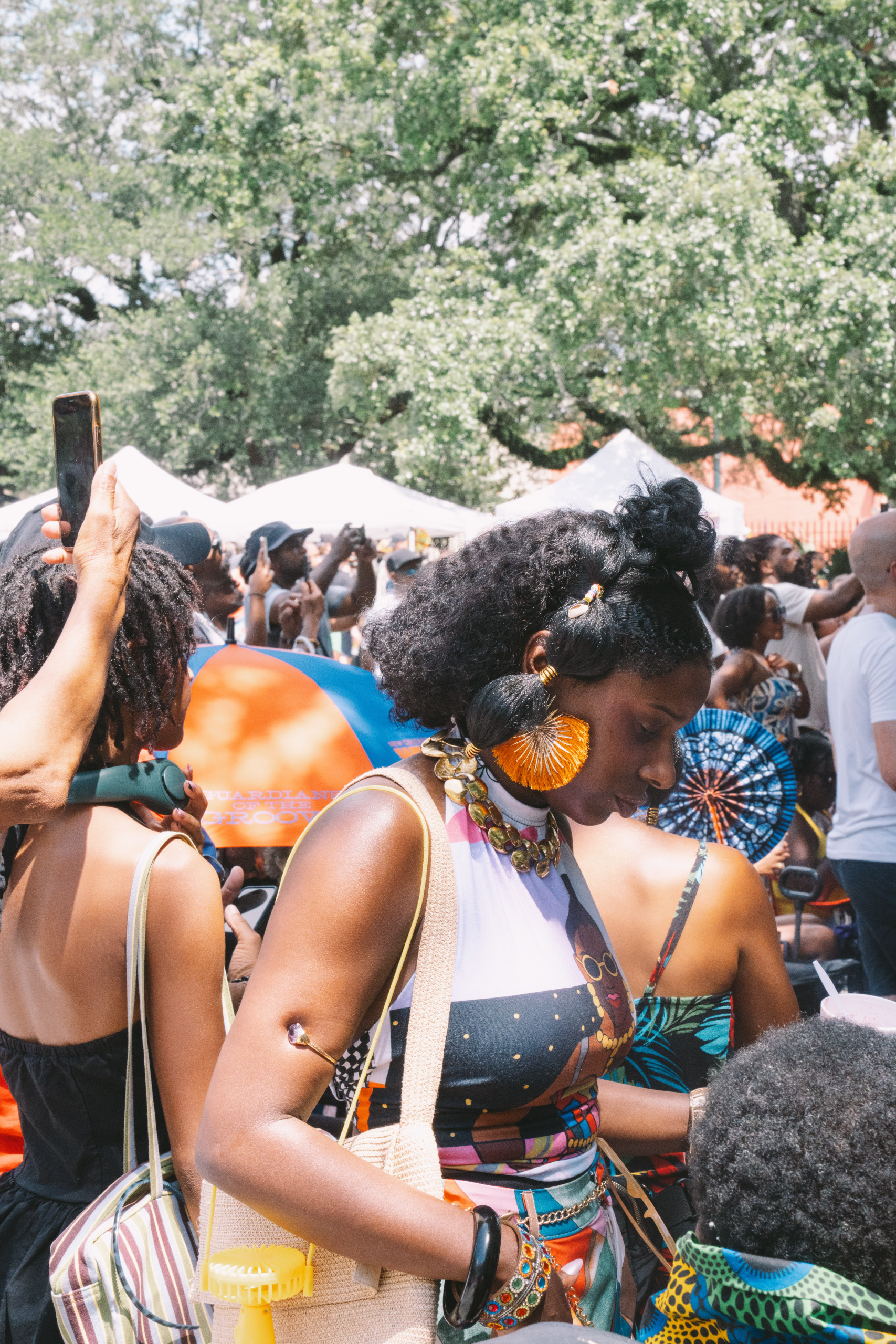
Jones notes the biggest difference between New York and New Orleans is the amount of melanin inside one space. “It has been so amazing to see so many Black people in one place, selling and buying things from each other and giving back to our people. This is what I came for because back home, some vendors are white and Hispanic, which I get because NYC is very diverse. But here, everybody really embraces Black culture. What’s being done here is so unique and impactful.”
During this year’s festival, Livingston and her team centered its activations around reflection, celebration, and community engagement – with an emphasis on health equity – which is why the Black Heart Association’s (BHA) added presence in New Orleans was meaningful to so many.
“Our community is disproportionately affected by heart disease and hypertension, and BHA’s work centers on heart health awareness and practical approaches to wellness,” Livingston says. “We expect hundreds of attendees, so this is a great opportunity to provide screenings and health education to as many people as possible.”
BHA has been filling a necessary gap within the community for 10 years now, improving heart health for all by driving advocacy, delivering education, and empowering individuals to take charge of their well-being. Frederick Robinson and his wife, Tara, founded BHA after she survived her third heart attack in the span of a week. Recognizing that the Black community faces a 54 percent higher risk of dying from cardiovascular disease, it has become Frederick and Tara’s life mission to help individuals understand the causes, effects, and symptoms of heart disease and take meaningful action to prevent it. In the last decade, BHA has traveled to more than 50 cities, serving 300 different communities and providing over 20,000 screenings to those who need it most.
“We know that we’re at the top of every disease in the nation,” says Frederick Robinson, co-founder of BHA. “But we can either talk about it or be about it, and we want to be about it because everywhere we go, we understand that underserved communities are at risk. Any time we can change that narrative, we want to be a part of that change, and this gives us that opportunity…to empower more of our people to take health into their own hands, advocate for themselves, and have the information they need to live a heart healthy life.”
As a Texas-based organization, serving the community to commemorate the day of freedom for the last enslaved people in Galveston has become tradition. “The holiday itself commemorates the fact that we got information late [because] we had been free two years beforehand,” Robinson says. “So the idea of the holiday itself is to remind us we are usually the last ones to the party, and we are here on this day to ensure we are no longer the last ones when it comes to information regarding our heart health.”
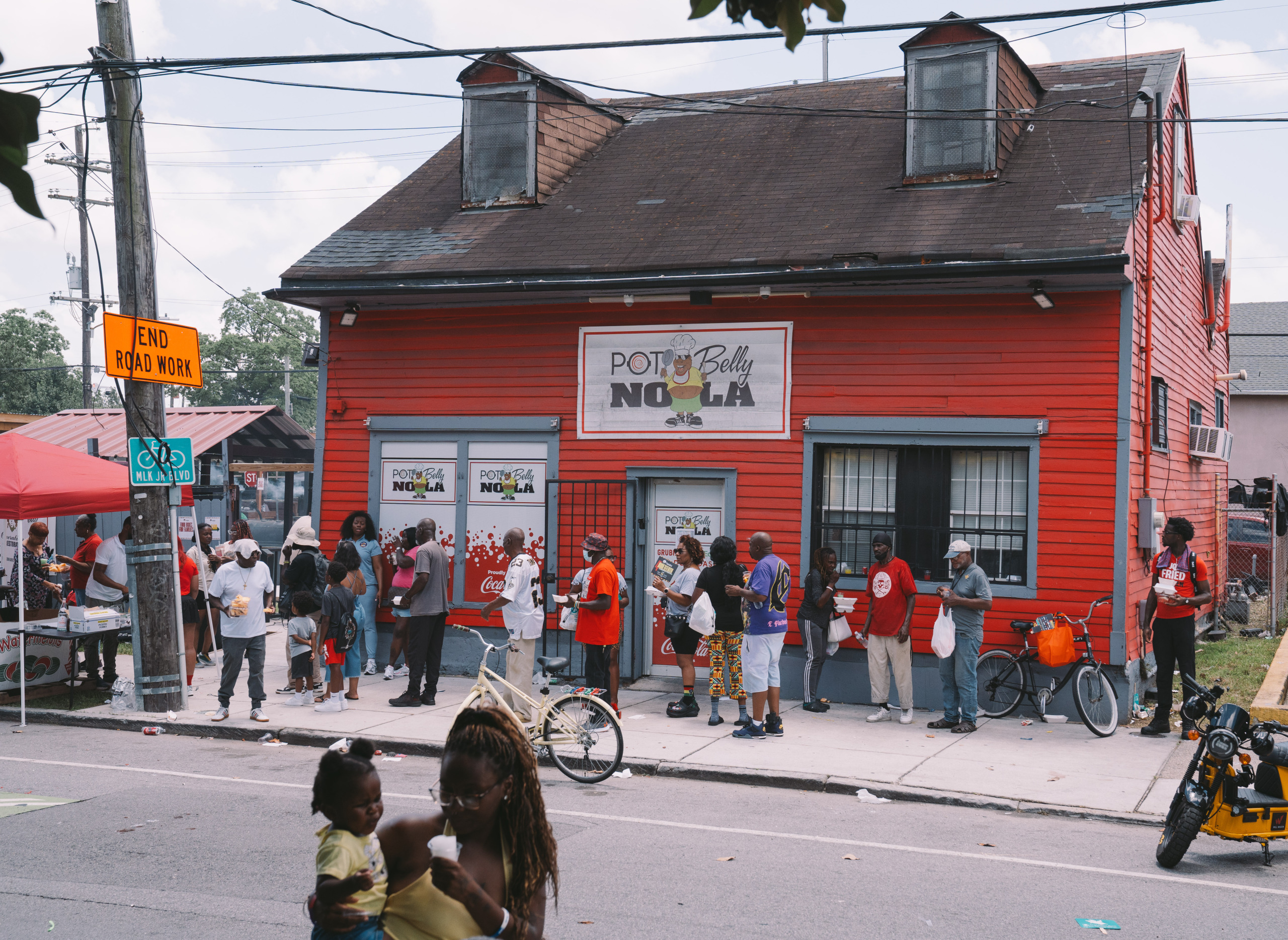
This year, BHA not only expanded its efforts to serve the New Orleans population on Juneteenth but also extended its footprint beyond Armstrong Park, setting up shop along Martin Luther King Jr. Boulevard in Central City at Operation Restoration’s Juneteenth Community Resource Fair. Operation Restoration, a local nonprofit organization committed to supporting women and girls impacted by incarceration, was in its fourth year hosting a full-day resource fair directly offering free hot meals, voter registration, STI testing, food boxes, diaper distribution, notary services, and other life-saving resources to some of the city’s most vulnerable community members. BHA’s health screening presence added another essential layer, especially considering the recent federal changes to the Affordable Care Act.
“The reality is not everybody has affordable healthcare,” says Montrell Carmouche, senior advisor of quality care for Operation Restoration. “And now, with health benefits being cut off for even more people, it’s almost impossible for our people to access these types of services, and it’s our job to fill in the gap.”
Despite the growing, ongoing racial tension across the country, Carmouche believes the organization’s annual Juneteenth event is a necessary constant for the community. “Even though we are in a fight, this is just reinforcement of how important the work we do is and how far we’ve come. It’s not just a celebration but also a time to show that we’re operating as a collective and bringing people together,” Carmouche says, who also leads the nonprofit’s community bail fund that posts the full cash bail amount on behalf of people who are incarcerated solely due to their inability to post bail. “As a formerly incarcerated person who ended up serving time simply because I couldn’t afford bail, I’ve experienced firsthand how the system has made it a crime to be poor,” she says. “So we want to always use Juneteenth as a way to meet our people where they are and provide even more support because at Operation Restoration, we believe freedom should still be free.”
Whether in the Lone Star State, the Big Apple, or the Crescent City, Robinson believes the meaning and celebration of Juneteenth looks identical for most, if not all Black people. “Some things are universal…at the end of the day, Black folks have more in common than [we] don’t, especially in terms of history and the road we’ve traveled,” Robinson says. I equate it to the HBCU family…we fight amongst each other, but in the grand scheme of things, we are one family from different yards. That’s how I look at Black people in general…no matter where we are geographically, we come from the same place.”
For Robinson, the work extends beyond a single holiday, festival, or city. At its core, BHA’s mission is about making sure Black communities have the information and resources they need to advocate for their health before a crisis happens. And whether that work takes place in Texas, New Orleans, or another community across the country, the goal remains the same: meet people where they are, close the information gap, and help more Black people take their health into their own hands.

Author: John Lawson II
Read the original article on Essence.