
On Chicago’s South Side, the Obama Presidential Center is now open to the public, ending a journey years in the making. Set on 19.3 acres of Jackson Park, the campus sits near the Museum of Science and Industry and the University of Chicago, with the neighborhoods closely connected to Barack and Michelle Obama surrounding it.
Ahead of its opening this past summer, I toured the Obama Presidential Center Museum and spoke with Dr. Louise Bernard, Director of the Obama Presidential Center Museum at The Obama Foundation, about creating a destination meant to tell the story of America’s first Black president and First Lady while asking visitors to consider their own place in the country’s future.
“It has been such a journey to create a complex of the scale and the scope and to really think about all of the connections to be made between the story of the administration and the ongoing work of the foundation and how art brings people together,” Bernard told ESSENCE. “ All of that is created. All of that is woven together.”
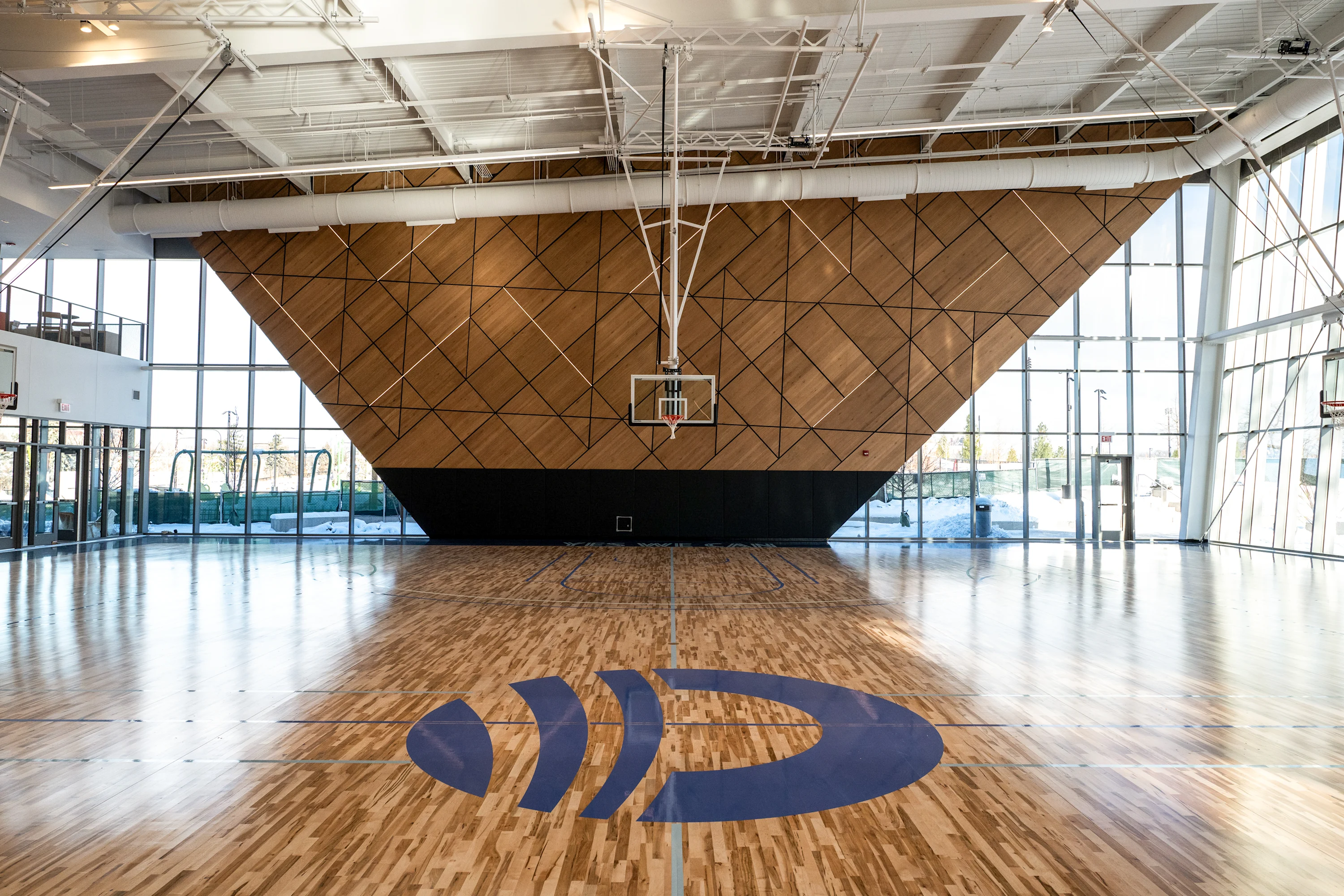
The museum occupies a vertical building designed to limit its footprint within historic Jackson Park. Elsewhere on the campus, visitors will find a Chicago Public Library branch and an athletic facility with an NBA regulation-size basketball court. A fruit and vegetable garden will accompany a classroom with a test kitchen, and the grounds also include a great lawn and an inclusively designed playground.
Most of the OPC will remain open without admission, with only the museum exhibits requiring a ticket. Bernard explained that it was designed to make the location somewhere people could visit even without entering the museum. “It is a campus, but it’s also a civic commons that feels open and accessible and welcoming,” she said. “We want for the community residents to feel a real sense of belonging in this space.”
Inside, the museum unfolds over four exhibition floors before reaching the Nelson Mandela Sky Room at the top. The journey begins on Level 2 with Toward a More Perfect Union, which places the Obamas’ rise within a broader account of American democracy. Visitors encounter material connected to labor and civil rights before arriving at Building Lives of Service, where Barack Obama and Michelle Robinson’s lives before the White House come into view. Their wedding invitation is among the personal artifacts displayed alongside material from Obama’s early political campaigns.
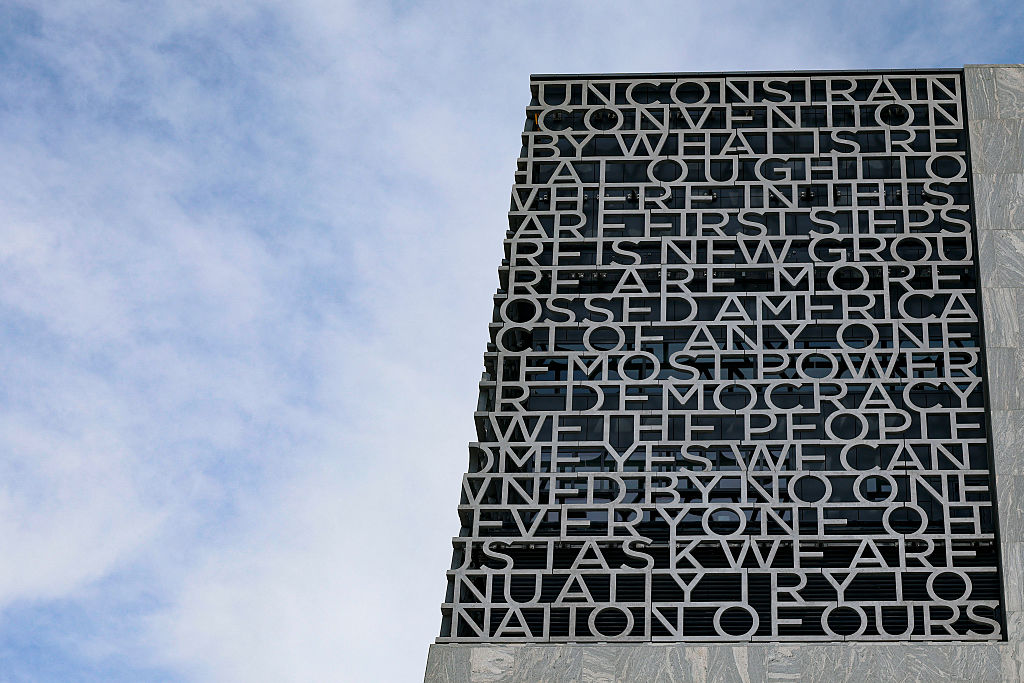
Yes We Can turns to the 2008 presidential campaign and the people who helped carry Obama to the White House. Organizers and volunteers receive substantial attention here, reinforcing a theme visitors encounter repeatedly: presidential history also belongs to the people who participated in it. An installation featuring 440 campaign buttons captures how supporters translated a political campaign into something personal.
Level 3 enters the presidency itself, as Working for the Common Good begins with the circumstances Obama inherited in January 2009, including an economy in severe distress and military conflicts overseas. Exhibits examine his administration’s record, including the Affordable Care Act and the Paris Agreement. Protecting and Defending considers Obama’s responsibilities as Commander-in-Chief, including the raid on Osama bin Laden and the repeal of Don’t Ask, Don’t Tell. Nearby, Michelle Obama receives a dedicated exhibition examining her years as First Lady and programs such as Let’s Move! and Joining Forces.
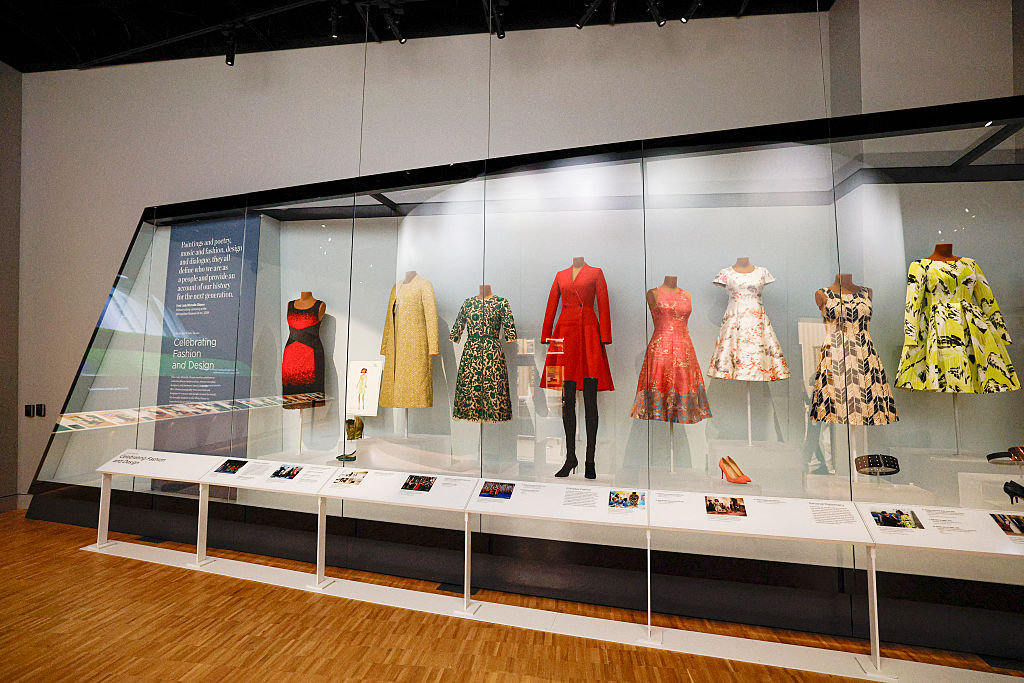
Level 4, The People’s House, explores how the Obama family lived at 1600 Pennsylvania Avenue and welcomed the public into a building frequently viewed from a distance. Clothing worn by Mrs. Obama appears alongside gifts from foreign leaders and sports memorabilia, while miniature White House rooms offer another perspective on the residence. (Janelle Monáe is featured in one of the small installations—the craftsmanship is second to none.)
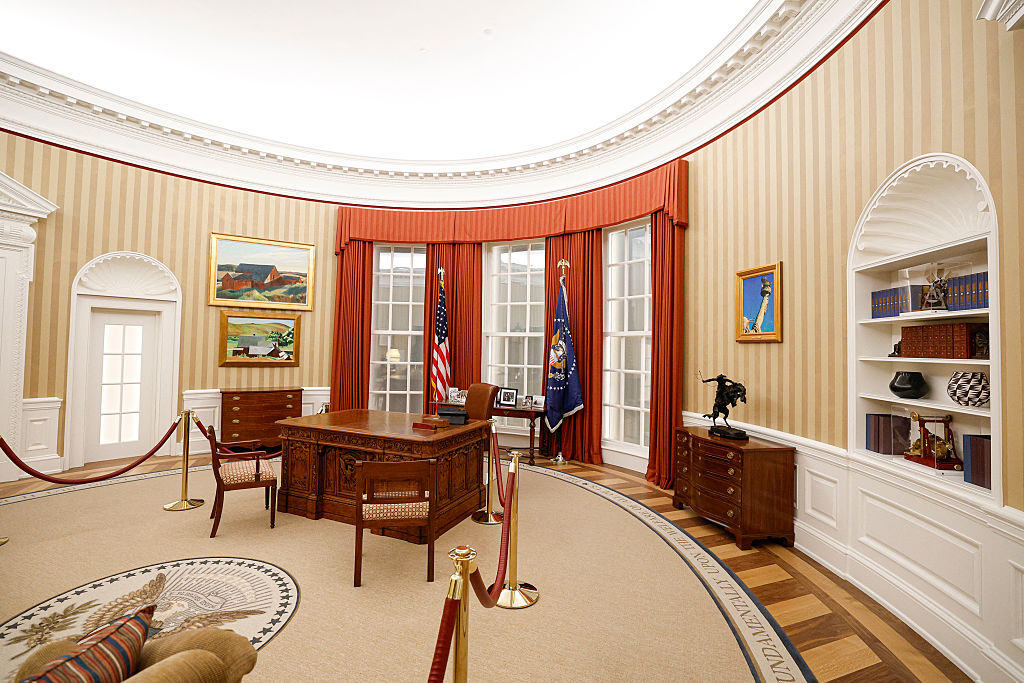
Its biggest draw may be the full-scale replica of President Obama’s Oval Office, which always has a line to enter. Visitors can enter the recreated workspace and sit behind a reproduction of the Resolute Desk, placing themselves inside one of the most familiar rooms in American government.
Level 5 turns the museum’s attention toward what follows a presidency. We The People considers civic participation and the continuing work required in a democracy. Exhibits address marriage equality and gender pay equity, while Innovating for Change explores the Obama administration’s interest in science and technology. One artifact recalls the lighter side of this effort: the “Extreme Marshmallow Cannon” demonstrated by teenage inventor Joey Hudy during the 2012 White House Science Fair. Visitors can then create a digital button in Yes You Can!, detailing something they hope to change themselves.
Art is also embedded throughout the center, of which I was personally excited about. Twenty-eight site-specific commissions involving 30 artists have been created for the campus, with many located in spaces requiring no museum ticket. The roster ranges from creatives such as Alison Saar to Richard Hunt. President Obama formally approved the selections, with Michelle Obama also participating in discussions.
“We wanted to ensure that there was a diverse mix in terms of luminary figures, very well established artists like Mark Bradford, Theaster Gates, Julie Mehretu, for example, and then emerging artists like Lindsay Adams or Tyanna J. Buie and Nekisha Durrett,” Bernard noted.
Some artists also ventured into unfamiliar territory—Mehretu worked in glass for the first time, while Nick Cave collaborated with Marie Watt for their first joint project. Bernard explained how artists visited the locations where their commissions would eventually live before developing their responses to each space. “It was really for the artists to best understand how their practice would be represented through the commission in this particular space,” she said.
The museum concludes high above Jackson Park in the Nelson Mandela Sky Room. Windows provide a sweeping view of Chicago, returning visitors to the city where Michelle Obama grew up and Barack Obama built his early career. From there, the relationship between the museum and its surroundings becomes especially clear. The OPC tells the story of a presidency, but its final floor does not leave visitors in 2017, its closing message speaks to a hopeful future.
“It was in keeping with the Obamas’ spirit of their connection to history, their recognition of the people who came before them, their sense of dignity and style,” she said. “So there was just this kind of seamless organic connection that I think also came through the selection of the artist to begin with.”

Author: Okla Jones
Read the original article on Essence.