
There wasn’t much debate after this year’s BET Awards: the network got it right.
And the timing couldn’t have been more significant. Across the television industry, legacy networks are grappling with declining linear viewership, streaming disruption and an increasingly fragmented audience whose attention is divided among TikTok, YouTube, streaming platforms and creator-led media. In that environment, producing a live television event that can still cut through the noise is becoming increasingly difficult.
However, this year’s BET Awards did exactly that. From comedian Druski’s standout hosting debut to performances and viral moments that dominated social media, the 2026 ceremony reminded viewers why the BET Awards has long been considered Black culture’s biggest night.
More importantly, it reminded the industry that BET still knows how to command the attention of its audience.
The numbers back it up, too. The broadcast became the highest-rated BET Awards on BET since 2019 among adults 18 to 49, with 1.4 million viewers tuning in on BET alone, up 22 percent from the previous year. Across 12 Paramount networks, the show reached 2.6 million viewers, an 18 percent year-over-year increase. Digital views jumped 187 percent, while the ceremony generated 9.3 million social interactions, making it the most social program across all of television that day. More than 50,000 people also attended events throughout BET Experience weekend.
For Louis Carr, however, the success wasn’t simply about ratings, numbers, or trending topics. It was validation.
Less than a year into his tenure as president of BET, Carr sees the awards show’s resurgence as proof that a nearly 46-year-old media brand can still evolve without abandoning the community that built it. As media companies navigate changing viewing habits, creator-led platforms and continued industry consolidation, the question is how they remain culturally indispensable through changing times.
Carr believes the answer begins with one thing: knowing exactly who you’re serving.
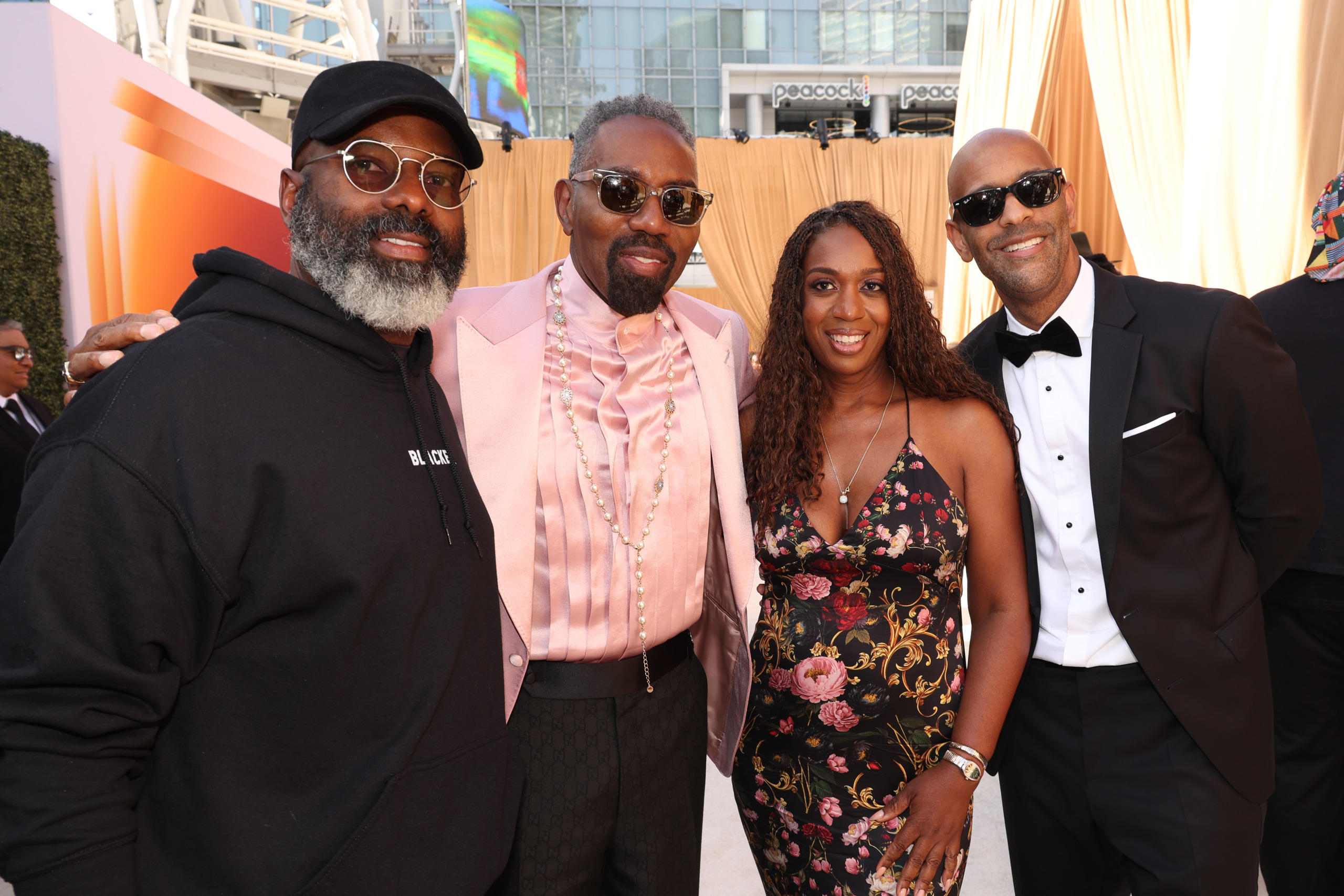
“The Black consumer wants to be seen, they want to be heard, they want to be respected, they want to be understood, and they want to be served,” Carr tells ESSENCE. “The more we are intentional about that mission… the better opportunity brands like BET and ESSENCE have to really have a foothold in the market.”
And there is considerable economic power behind that audience. Black buying power is projected to reach $2.1 trillion in 2026, according to projections from the Selig Center for Economic Growth cited by Nielsen. But the relationship between Black consumers and the companies courting their dollars is increasingly about more than purchasing power. Nielsen found that 67 percent of Black consumers pay more attention to brands that reflect their culture, compared with 46 percent of consumers overall. Seventy percent also say they will stop buying from brands they perceive as devaluing their community.
In other words, understanding Black audiences isn’t simply a cultural imperative. It’s good business.
That philosophy has become the foundation of Carr’s leadership. Although he officially stepped into the president’s role last December, his relationship with BET spans nearly four decades. During that time, Carr helped generate more than $10 billion in advertising revenue while witnessing nearly every transformation the media industry has experienced—from appointment television to streaming, social media and today’s creator economy.
Rather than viewing those shifts as reasons to reinvent BET entirely, Carr sees them as opportunities to deliver the network’s mission in new ways. “The thing that remains constant… is the Black consumer,” he shares.
That distinction may sound simple, but it reflects a larger business strategy. While platforms continue to evolve, Carr argues that understanding audience behavior—not chasing every new trend—is what ultimately drives longevity.
It’s a lesson that became especially evident with this year’s BET Awards.
Carr says the company entered 2026 with three guiding pillars: community, culture and connection. Together, they’ve helped shape everything from programming decisions to the overall vision for the network.
“We established a tagline that BET is something you can believe in,” he says. “I think right now in our country, whether it’s politics or whether it’s economics, Black people are looking for something they can believe in.”
That philosophy also influenced one of the award shows biggest successes: Druski. Rather than asking one of the internet’s biggest comedic personalities to conform to a traditional awards-show format, BET embraced what made him successful in the first place.
“We wanted Druski to do what Druski does,” Carr says. “We didn’t want to cap or handcuff any of his creativity.”
The approach is particularly notable at a time when digital creators increasingly command audiences that, at one time, were reserved for traditional media companies. For legacy brands, the creator economy presents a choice: treat those personalities as competitors for audience attention or find ways to work alongside them. Carr is firmly betting on the latter.
“We’re a partner,” he says. “We’re not trying to change anything they’re doing. We’re not trying to compete with them.”
There’s a business case for that strategy, too. Nielsen found that 52 percent of Black audiences are more likely to purchase from an established brand when it partners with creators, personalities or organizations connected to their interests, compared with 45 percent of consumers overall.
That collaborative mindset extends well beyond awards shows. Carr points to new comedy series, documentaries, sports programming, HBCU basketball coverage and micro dramas as examples of how BET is broadening its content strategy while remaining rooted in its legacy identity.
To put that into perspective, the network brought back ComicView this year, launched the comedy series Lot Patrol and Terrence J’s Behind the Image, and entered sports programming through a partnership with Ice Cube’s BIG3. Carr says HBCU basketball coverage, beginning with Howard University, is also slated for later this year, along with micro dramas and documentaries from Queen Latifah and LL COOL J.
BET is also finding recognition for its existing programming. The Ms. Pat Show earned a Primetime Emmy nomination for Outstanding Directing for a Comedy Series, while Tyler Perry’s Assisted Living received a nomination for Outstanding Picture Editing for a Multi-Camera Comedy Series.
Still, Carr doesn’t pretend the network has always gotten it right. When asked about the longstanding criticism that BET has leaned too heavily on familiar programming—yes, including those seemingly endless Baby Boy marathons—Carr offered an unexpectedly candid response.
“At some point in time, you’re right,” he says. “And we’re sorry for that. We’re trying to do better.”
That willingness to acknowledge criticism may also explain another aspect of Carr’s leadership style: he pays attention to what audiences actually say.
“They tell me not to read the social media comments,” he laughs. “I read them all the time because people are being their authentic self there.”
For Carr, engagement isn’t measured solely through ratings or internal analytics. It’s measured by whether audiences feel understood. Following the BET Awards, that’s exactly what he heard.
“People said they got it,” he recalls. “They understood what was needed. They delivered it.”
The network’s challenge now is translating that momentum. Carr is taking the helm during a pivotal moment not only for BET but for its parent company. Amid the Paramount-Skydance merger and another wave of consolidation across entertainment, BET is tasked with protecting its identity while adapting to an industry undergoing rapid change.
“Our focus is always consumer first,” he says. “Whatever’s going around in the media landscape, we continue our focus consistently every day on what’s best for our consumer.”
Beyond programming, Carr believes one of his most important responsibilities is continuing to educate corporate America on the economic power of Black audiences—a conversation he’s been leading throughout his career.
“My job is simple,” he says. “I’m an educator. I’m an educator to people on the value of the Black consumer market.”
After decades of working alongside advertisers and marketers, Carr’s argument isn’t that Black consumers spend money, but that their influence regularly extends beyond the Black community into the mainstream marketplace.
“What Black consumers do today,” Carr says, “the world does tomorrow.”
Beyond our projected $2.1 trillion in buying power, Black audiences are driving engagement across emerging areas of the media business. Nielsen reports that Black audiences represent roughly 13 percent of the television population but account for 31 percent of FAST engagement. Black adults ages 18 to 49 also spend nearly seven and a half more hours per week with connected television than their counterparts.
It’s why Black media’s role extends beyond simply producing television shows, articles or viral moments. Companies like BET exist within a larger ecosystem that creates opportunities for Black creators, connects advertisers with Black consumers, shapes culture and provides audiences with something increasingly valuable in a crowded marketplace: trust.
That makes Carr’s job particularly consequential. His task is to figure out what longevity looks like when the business model around that brand is changing.
Looking ahead, Carr hopes his leadership will be remembered not only for helping BET evolve, but for leading with intention.
“I hope people will look at my leadership and say, ‘he was very intentional about his service to Black community and Black consumers, and that he was a person who shared his knowledge and shared opportunities with anybody in the space who was serving Black people.’”
Carr has spent much of his career educating advertisers on the value of the Black consumer. Nearly four decades later, perhaps the larger lesson is even simpler: investing in Black audiences isn’t a niche strategy. It’s good business.
And in an era when algorithms increasingly dictate what people watch and where they spend their attention, Carr is betting that trust—not technology—is still one of Black media’s greatest competitive advantages.

Author: Shelby Stewart
Read the original article on Essence.