
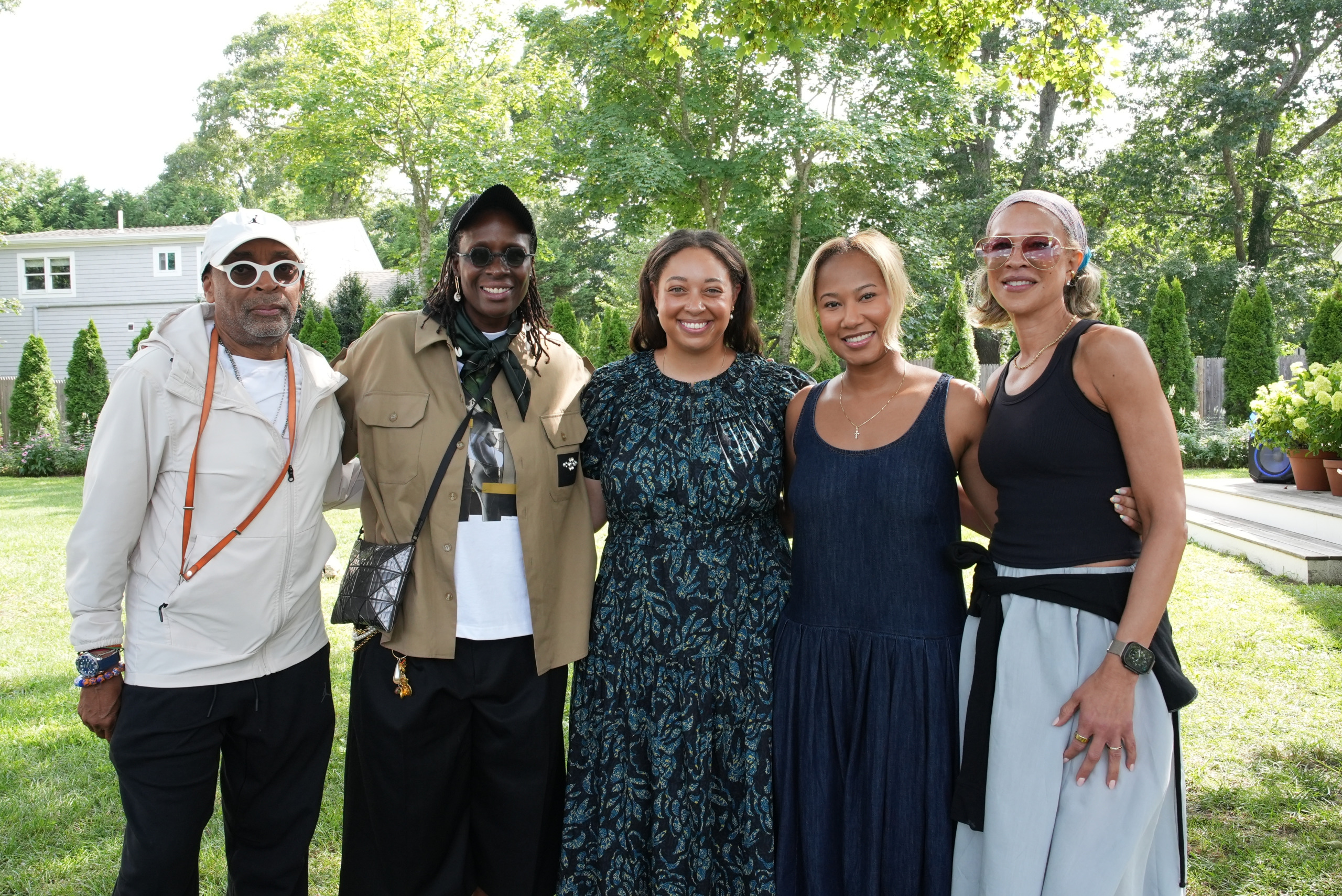
When asked, “what does home mean to Black women living in America?” the answer might feel complicated. And that perhaps may even be an understatement, given our fraught history in this country. But what better way to tackle such a question than via the power of art? This was the idea behind Martha’s Vineyard’s most recent pop-up exhibition, A House Is Not a Home—powered by curators Jade Flint and artist Taylor Thomas, and The Long Gallery Harlem, founded by Lewis Long—that attracted the likes of Tina Knowles, Spike Lee, Gabrielle Union, and more.
And, it was a similar question that got the ball rolling for the trio to collaborate. “Lewis called me one morning in early Spring to ask about my thoughts on America’s 250th anniversary,” Flint—who met Long through a mutual friend in 2020, and since have collaborated on many projects—shares. “At the time, I was planning to start a newsletter that would begin with my reflections on the topic, so we talked for quite a while about the current political climate in this country and Black people’s relationship to America’s Independence Day,” she adds. Then, “He proposed the idea to create an exhibition with all Black women artists.”
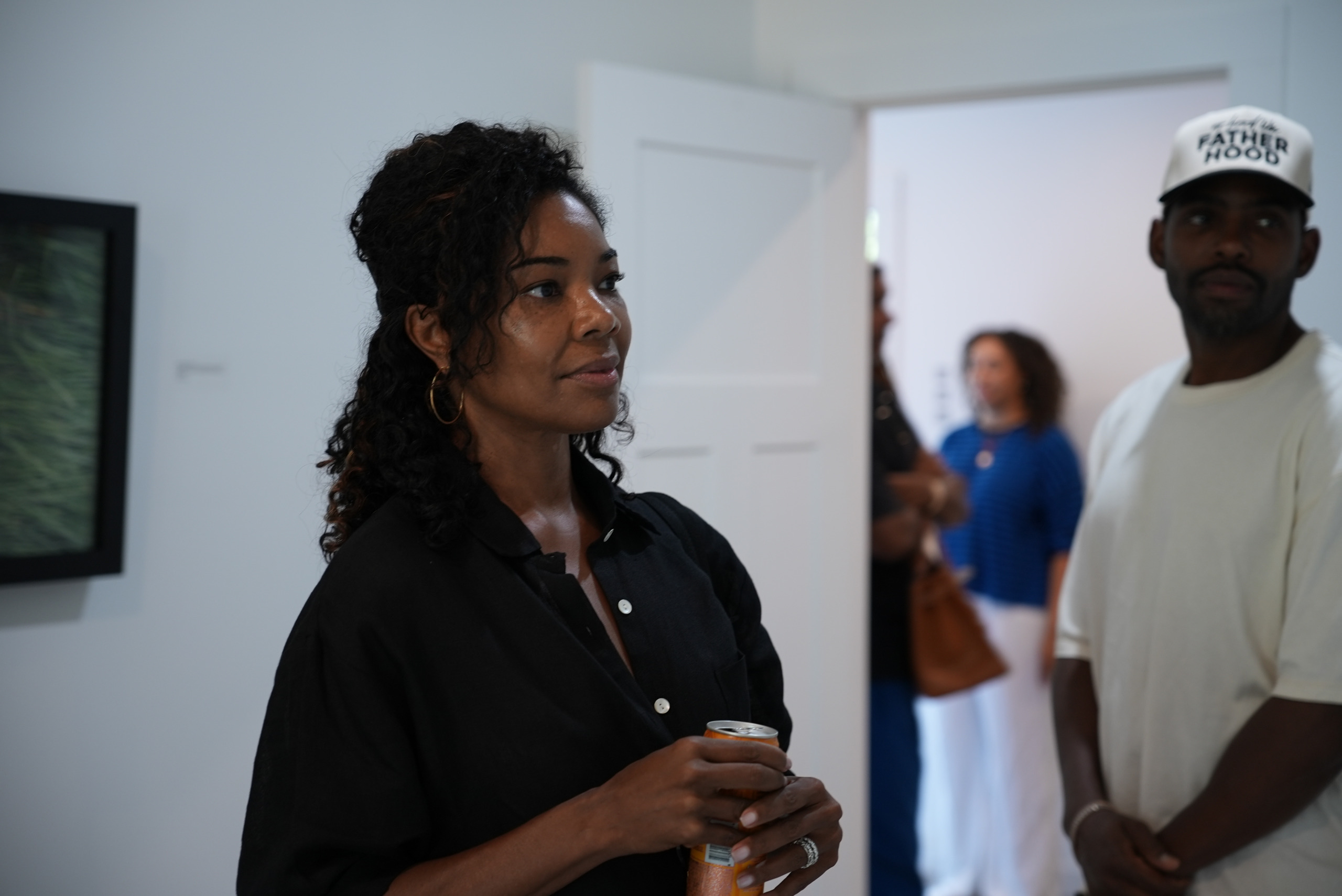
Between August 1st and 23rd, the pop-up lived in Oak Bluffs, the historically Black safe haven on the island. The Vineyard made for the perfect “home,” if you will, for an exhibit like this one. For starters, Thomas has been coming to the island since she was a child.
Additionally, Flint learned about the Vineyard’s history of the Black Whalers. “It’s a quintessential Black American story of making something out of nothing despite all odds pitted against them— something all Black people can relate to. And while the whalers provided most of the monetary resources for their households, the women are the ones who literally made their houses into homes,” she shares.
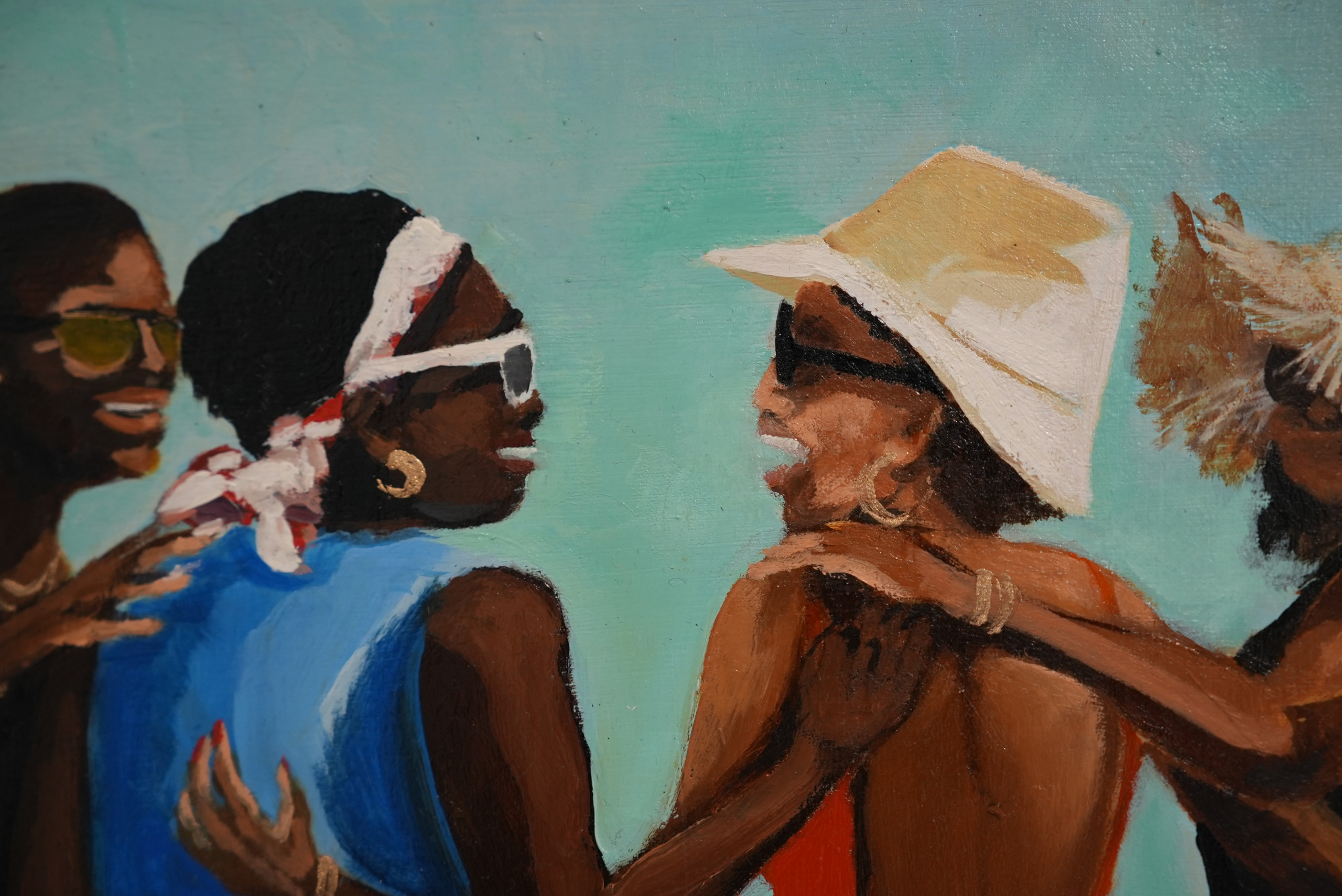
Martha’s Vineyard also reflects themes of reclaiming our communities’ relationship to water, which is something the curators explored in this project. “We were forcibly brought to this country via water. We have historically been excluded from public beaches and pools and face environmental racism in terms of having access to clean water,” Flint says. “However, there is still something spiritual about being near and in water. Many of our rituals include water as a purifying and healing element, and the history of Martha’s Vineyard supports our specific need for safety while allowing ourselves to be cleansed in the waters.”
And, not only this, there is a rich history of Black female artists, like Lois Malu Jones, coming to the Vineyard. As Long shares, “she had her first show on Martha’s vineyard in 1922 as a 17-year-old. She grew up in Boston and regularly came to the island as young people come today with their families with her dad. That lineage and that legacy was very important to me.”
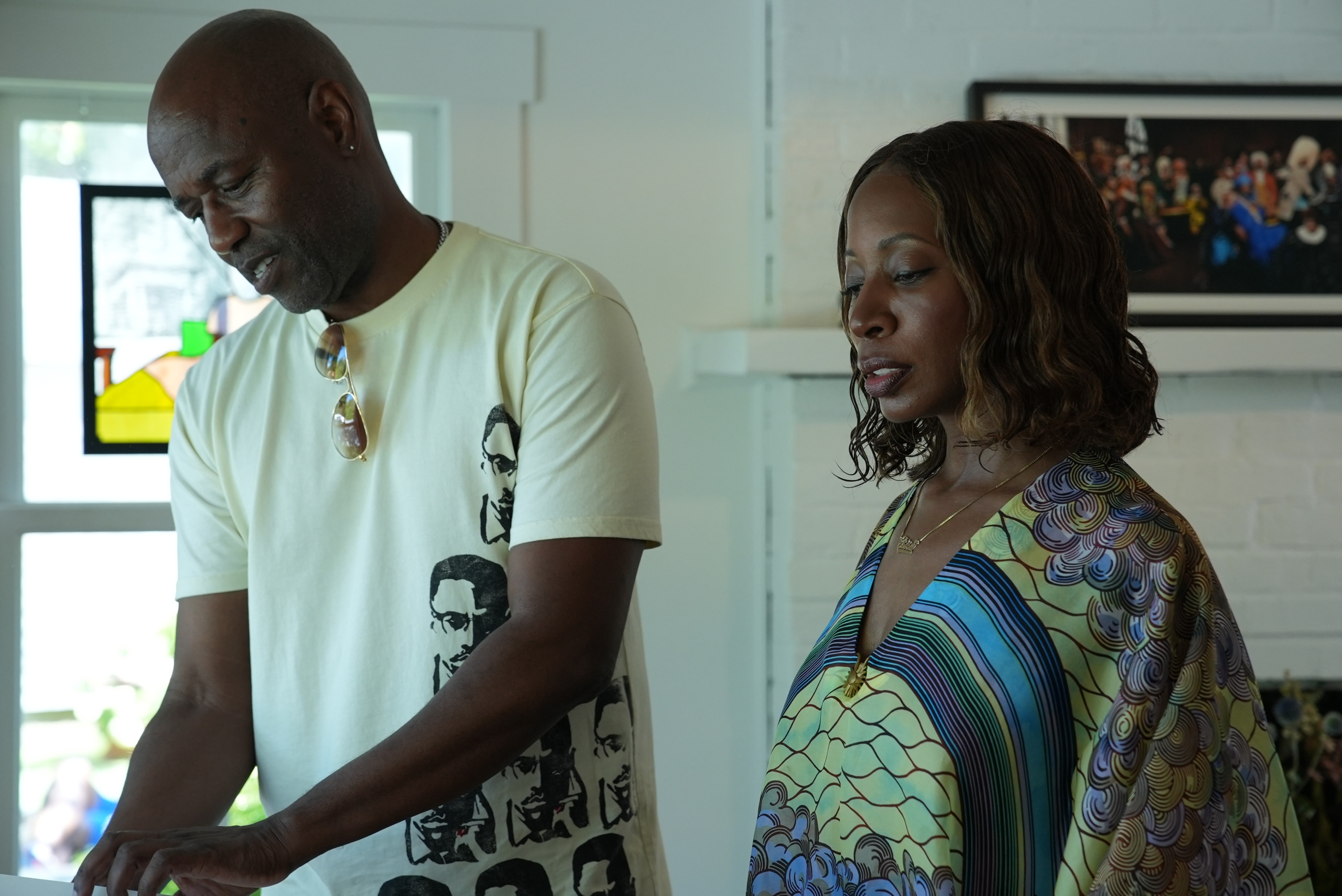
Filling the gallery walls were legendary and contemporary art. Think: everything from pieces by Carrie Mae Weems and Faith Ringgold, to Maya Beverly and Satchel Lee. “Having a mix of mediums was important,” Long shares, adding that he also wanted the exhibition to have a vibrant texture. And that it did.
“I’m especially proud of the conversations that we’ve been able to curate between some of the most respected Black female artists in contemporary art with emerging artists,” Thomas, who not only co-curated the exhibition, but also had her own pieces featured in it, says. “Being able to put “Tar Beach 2” by Faith Ringgold next to “you and i shine” by Alyssa Burke, who just completed her BFA from Cooper Union, is an absolute treat that I believe opens up intergenerational conversations about Black female identity and community that you very literally wouldn’t find anywhere else,” she adds. “That kind of flattened art hierarchy doesn’t happen in traditional galleries.”
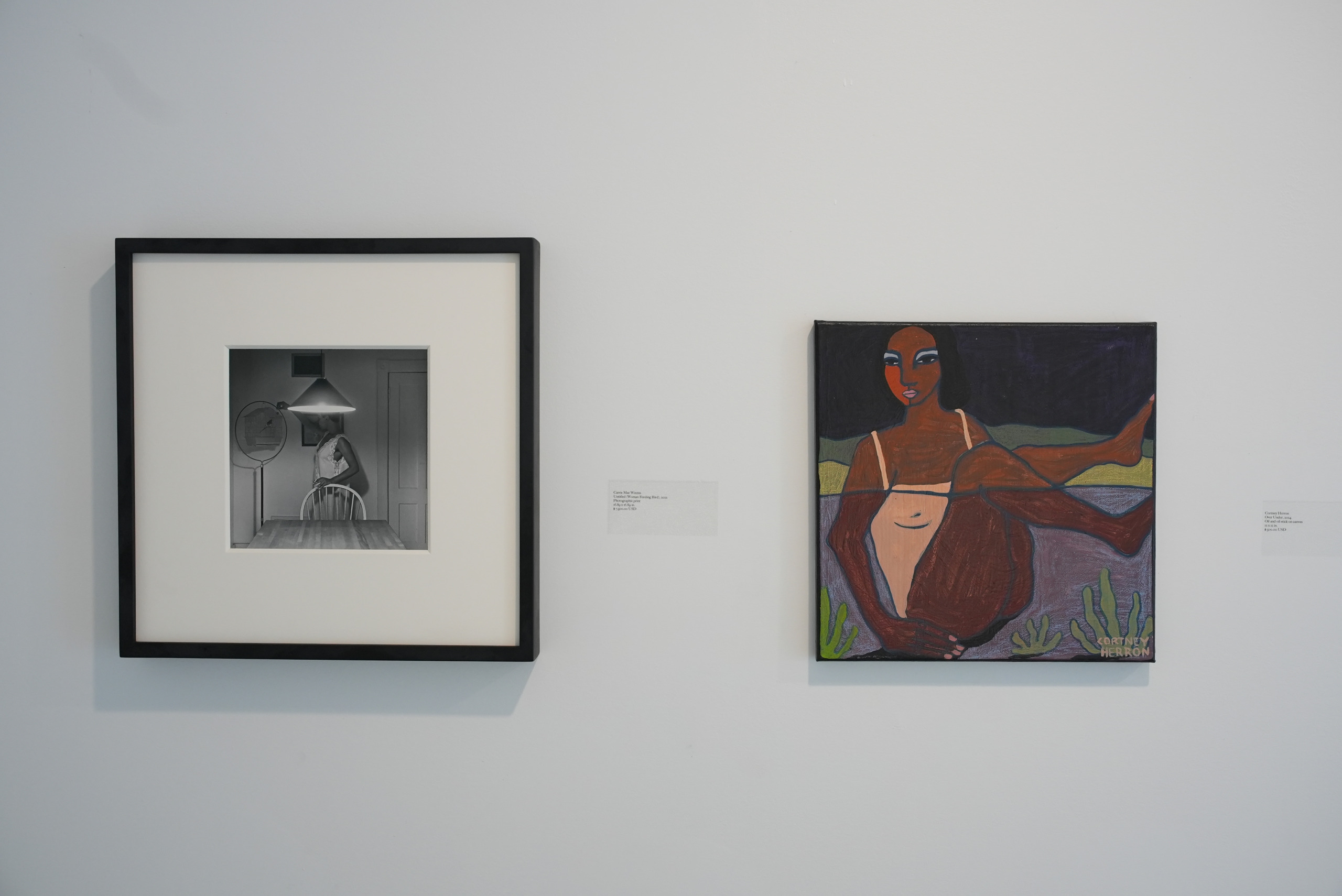
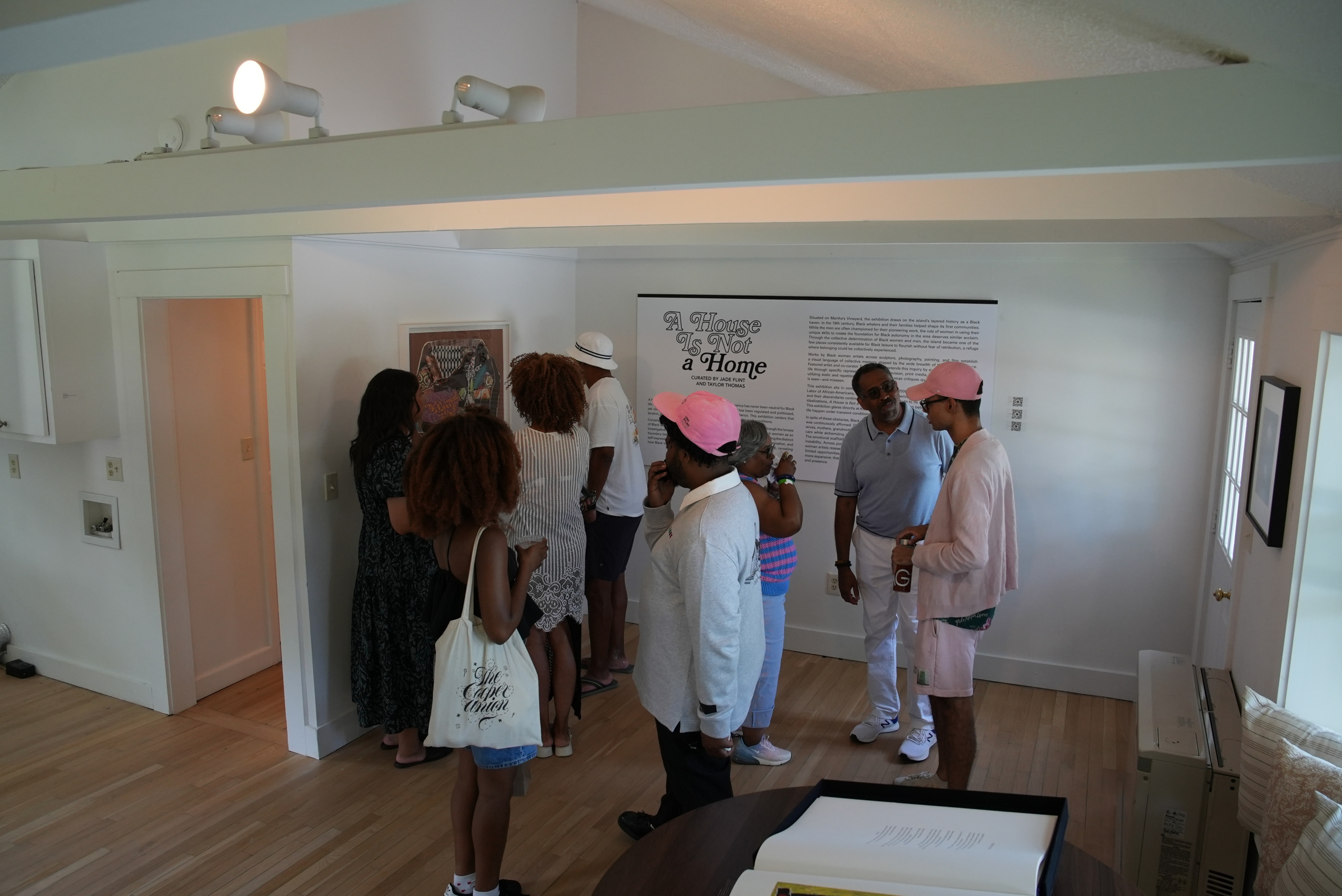
Speaking of the non traditional, the show itself wasn’t in a traditional white cube gallery, either. And, as Thomas adds, “we are thrilled not to play by those rules.” Instead, the location was, in itself, on theme, and situated in Thomas’ family-owned property, which consists of two small homes. “This allowed for my home to become a site for the sharing of a collective identity inspired by family, memory, and personal and cultural lineage,” she adds.
Further capitalizing on the theme, was the idea that they, as curators, made the gallery itself feel like a home, too. “We used the architectural details of the home and did some pretty unconventional things like hanging Taylor’s “Blue Tuesday” from the rafters in the kitchen and placing Renee Cox’s “The Signing” on top of the fireplace to really make it clear that this is not a traditional gallery space,” Flint says. This feeling was reflected in fragrances, by Imani Bordeaux, used in each room, and the playlist, which was equal parts soul, funk, and R&B.
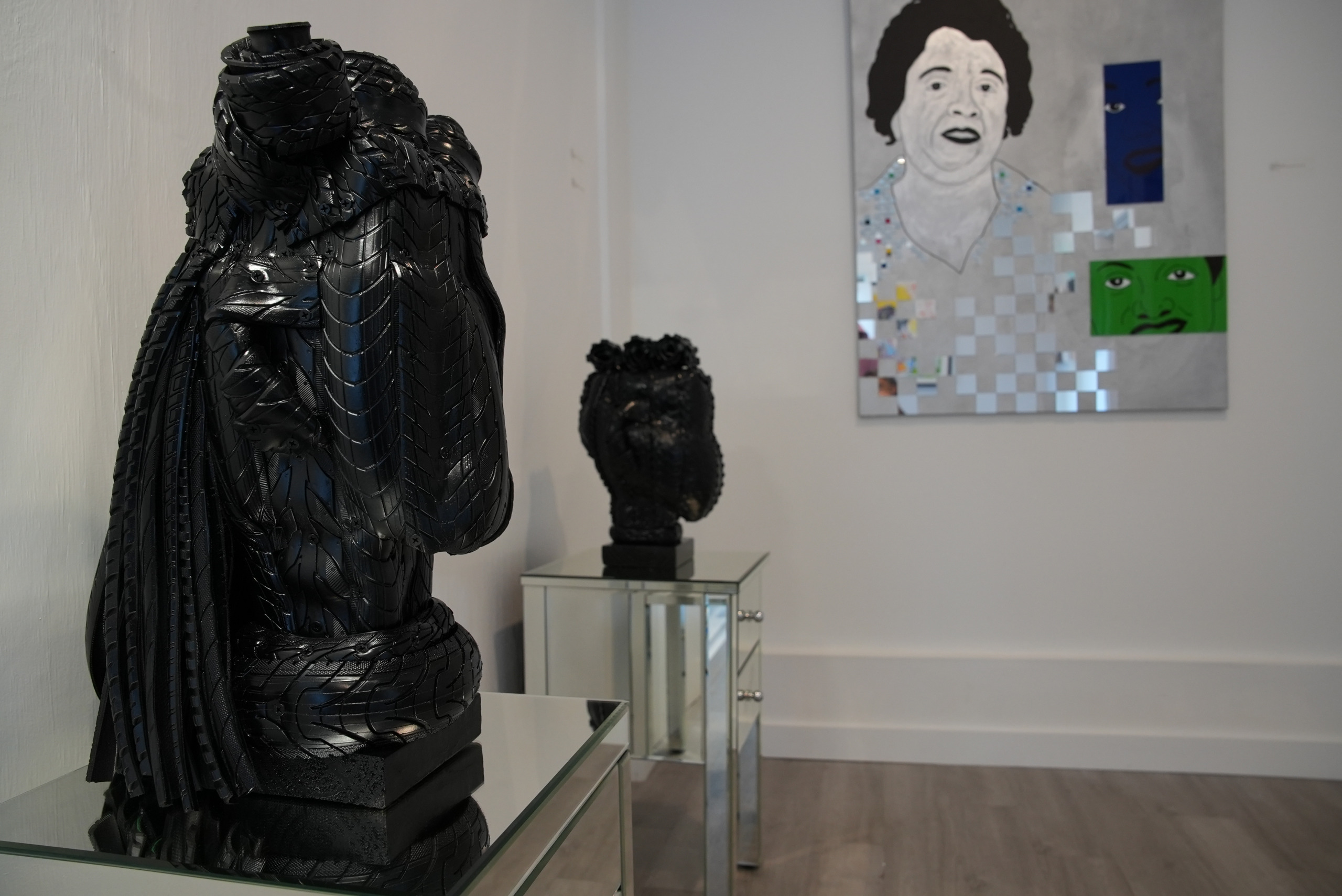
When it came to experiencing the space itself, “each bedroom in the main house and carriage house was transformed into an intimate wing with its own thesis to explore,” Thomas shares. “Ranging from different forms of resistance to the ways in which we build community through people and place, Jade and I wanted to curate the show in a way that inspires people to dive deeper into our understandings of home and identity,” she adds.
As for how they selected the artworks? They looked to the artists’ stories. “The artists that make up the show are a nod to the women, mothers, and matriarchs who bolster our homes with the emotional scaffolding that allows for identity creation and exploration,” Thomas says.
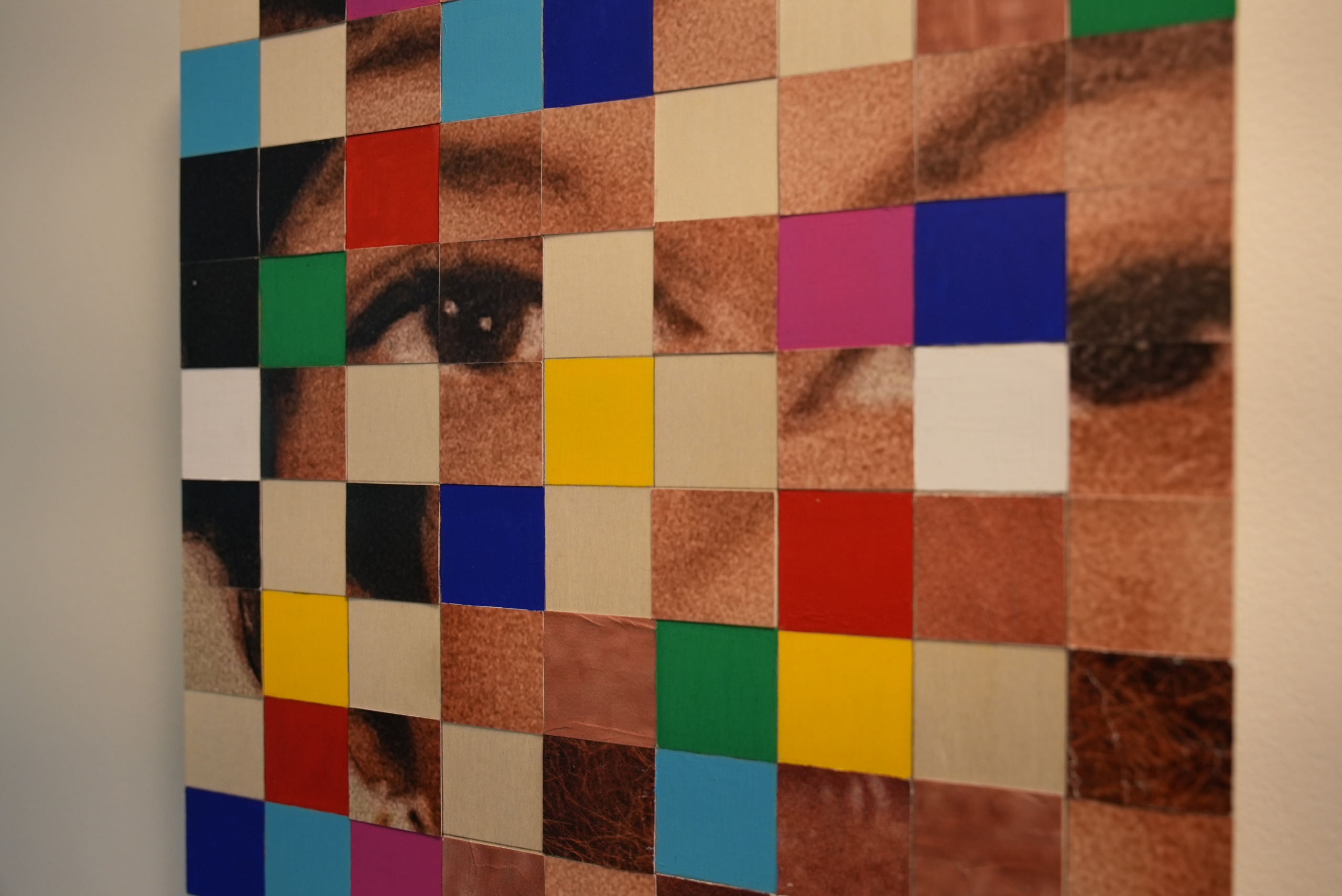
Additionally, they wanted to move away from any narratives that were “romanticized” or ignorant of what Black women in this country have truly faced. “We underwrote the literal foundation of this nation and continue to contribute meaningfully,” Flint shares about Black women. “If America is a house, Black women arguably made it a home. Our matriarchal ancestors were excluded from mainstream society while running the households of others and their own families,” she adds. “We understood the concept of invisible labor before academia had words to legitimize it. The curation of the show speaks directly to this tension and acknowledges the complexity we find ourselves in.”
These reasons are why Thomas’ own artwork—consisting of everything from paintings and composites, to gridwork and collages— made for the perfect addition to the gallery as well. “Thomas’ practice is centered on her family’s photo archives that were left to her by her grandmother,” Long, who met Thomas via her father at Howard, shares. “It was the perfect thread into this concept of domestic contributions and family.”
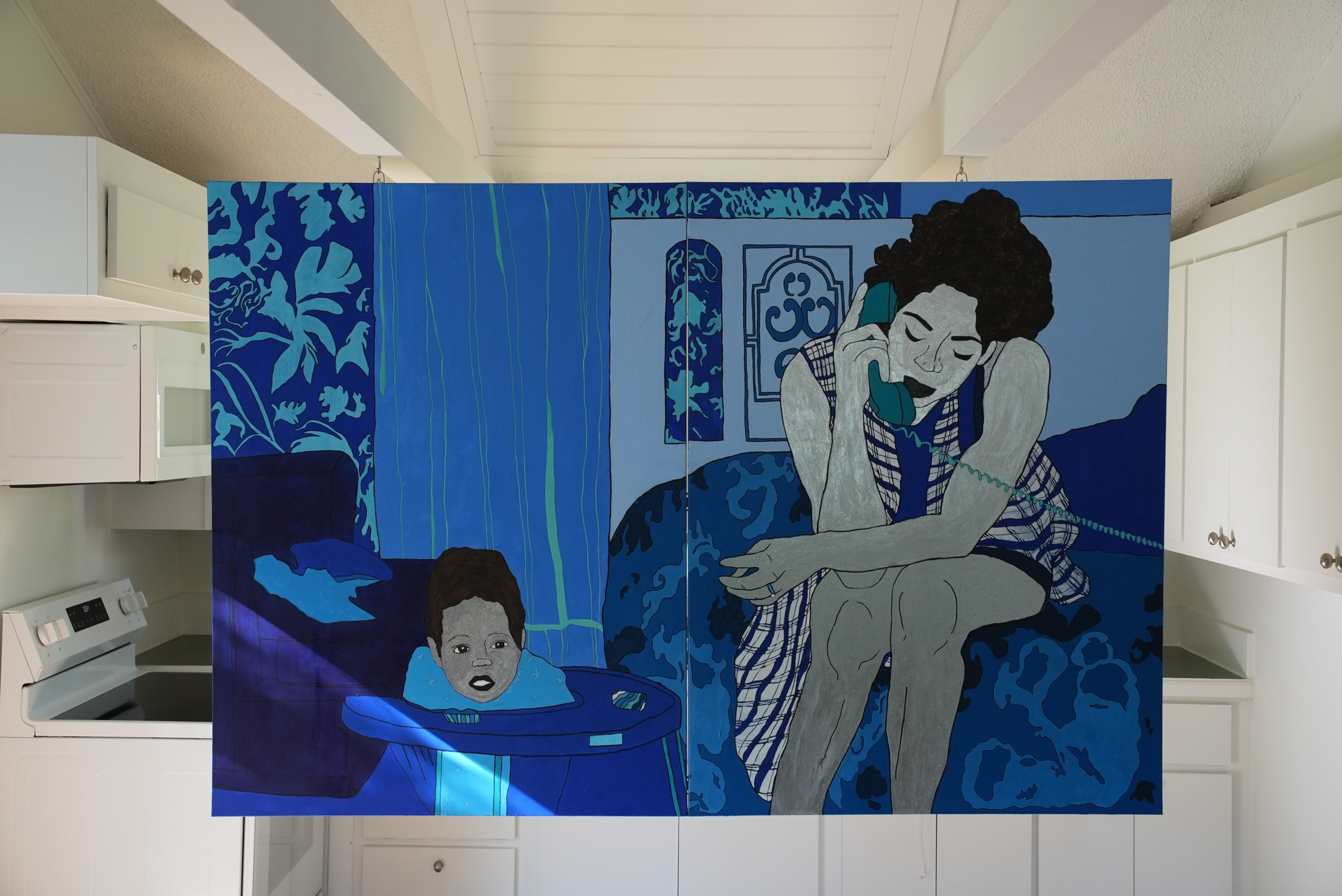
As for what you can expect next from the rising artist? “There are new avenues of thought that have begun to percolate through all of the thematic discussions Jade and I have had in preparation for the show that I can’t wait to dig into when I get back into my studio,” Thomas shares.
When reflecting on what it was like to be both a curator and artist on this project, Thomas shares, naturally, that it was an honor. “Approaching this show from a curatorial lens has also made me see my work differently,” she says. “Overall, A House is Not a Home is the most ambitious show I’ve been a part of creatively, let alone curated, and it’s the show that I am the most proud of thus far in my career,” she says. “I hope people left the show having felt seen and loved. It’s not often that we get to see so much art made in our own self-image by people from our community in a setting that’s intimate and grounded.”
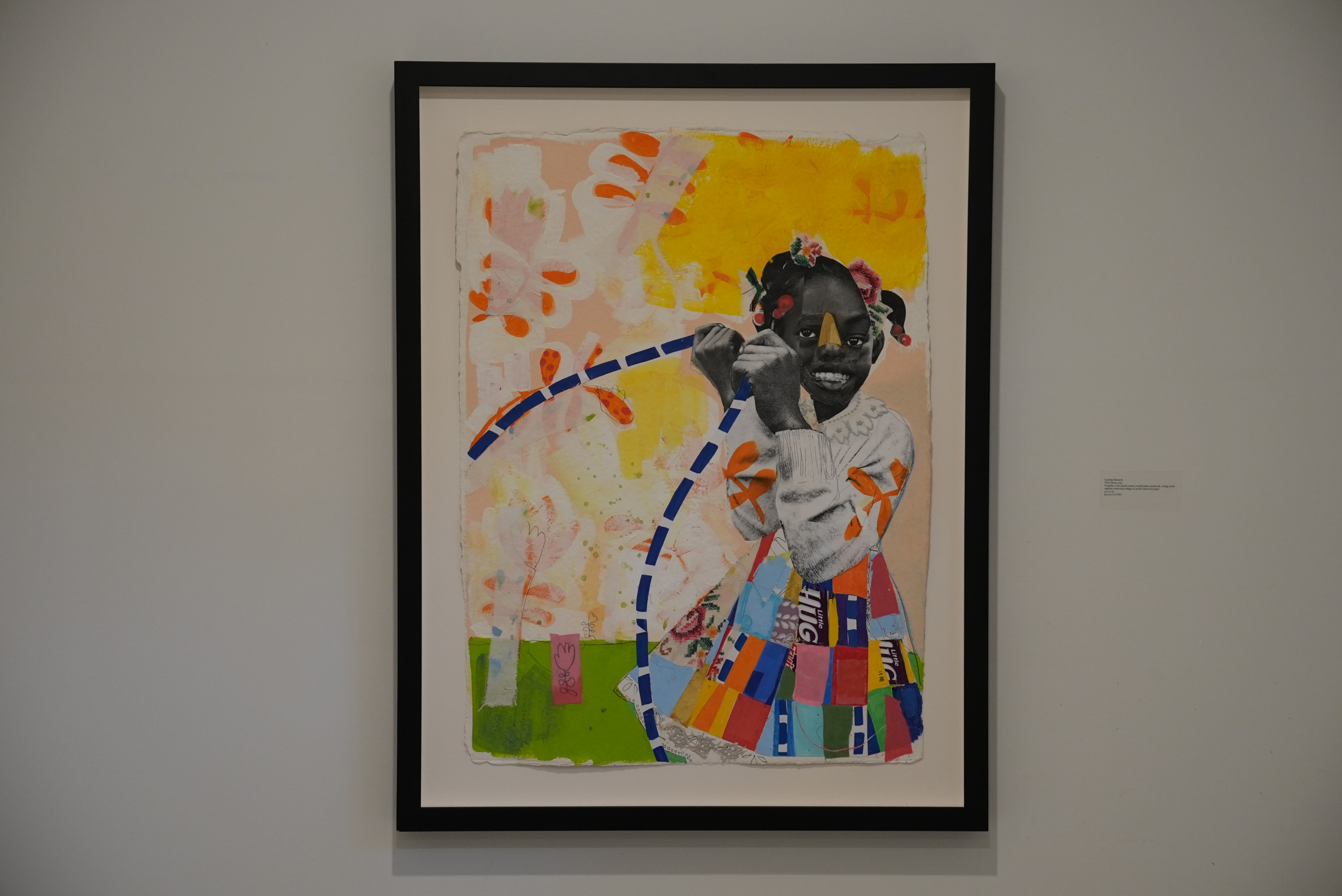
Meanwhile, Flint “loved that we were able to celebrate Black women and their role in bolstering our homes, our communities, and this country and harness Black women artists’ voices to accomplish that,” she says. “The work we do to create safe havens for ourselves and everyone around us can be thankless work and unseen by the people we love the most. And it doesn’t help that we often do it with grace, making it look easy. However, we can change that by communicating the full complexity of our beings through art.”
Similarly, for Long, “More than anything else I expect, and hope that visitors to this exhibition were affirmed and felt confident,” he says. “I hope they really cloaked themselves in all of the goodness of this country because of our contributions.”

Author: Akili King
Read the original article on Essence.